

 Guides
Data centres: construction risk, procurement models and delivery certainty

18 May 2026
6 min read
This website will offer limited functionality in this browser. We only support the recent versions of major browsers like Chrome, Firefox, Safari, and Edge.
Guides



Data centre construction and development is booming, with demand for new capacity surging by nearly 300% since 2023. Fuelled by the growth of the digital economy, the need for disaster recovery planning and the shift to working and shopping remotely, data centres will form a critical part of the infrastructure underpinning society’s continued evolution.
In the construction industry, speed of development can affect both build cost and the long-term quality of the asset, making it essential for developers and contractors to adopt an efficient, sustainable and balanced approach to these risks. Data centre development is also at the confluence of the built environment and energy/utility sectors, with clients taking different approaches to the design and construction of their data centre projects based on their experience in industry, OPEX and power requirements.
The surge in demand for data centres across sectors now raises the question: can the industry move fast enough and sustainably enough to keep pace with the growth required?
Data centres are significant developments, both in terms of size and energy consumption. Identifying sites suitable for hosting such a development is complex, with proximity to a reliable energy supply a key factor. As the energy transition and project sustainability become a priority, previously non-viable sites near renewable energy generating facilities are increasingly attractive for investment.
Other factors include the security of the site from risks that may disrupt service or affect latency, including energy supply for both power and cooling, transport links, local communications and connectivity infrastructure, and proximity to subsea cable landing sites.
For colocation providers, the viability of the development is likely to be contingent upon securing customers or tenants. The terms of those agreements are key and often carry financial penalties if delivery or capacity deadlines are missed, placing significant pressure on delivery timescales. Speed of construction is therefore often a primary driver, enabling developers to meet customer or tenant commitments.
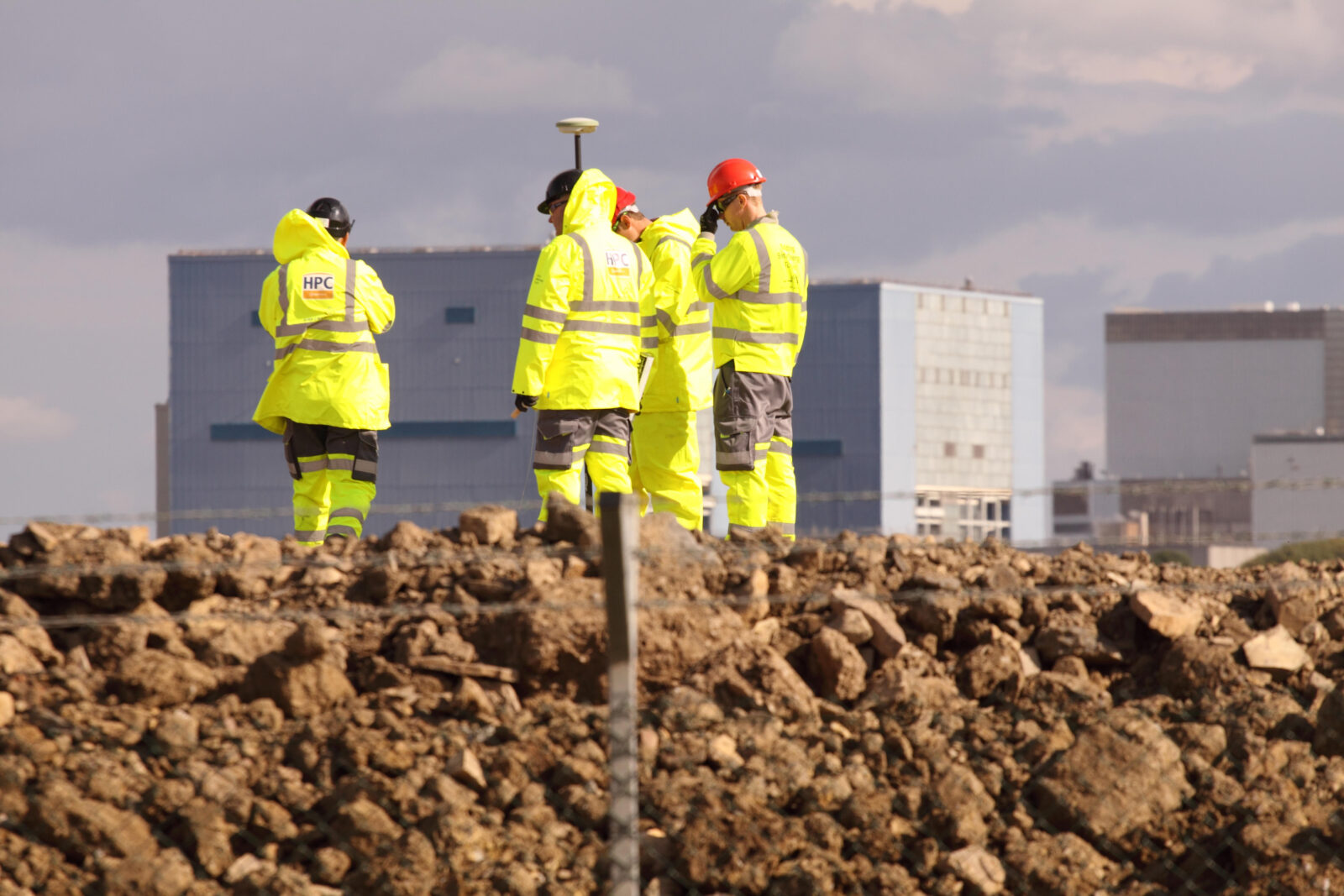

Another consequence of development at pace is that design and construction can take place simultaneously rather than sequentially, creating challenges for scoping, cost certainty and pricing transparency. This can leave developers at risk of unforeseen costs, liability exposure, or an unintended allocation of risk, particularly where there is no pre-agreement or appropriate contractual machinery to help manage these exposures. In some cases, construction agreements may not fully account for end-customer or tenant requirements, leaving developers with a greater degree of construction and operational risk than they might otherwise have assumed.
A persistent challenge in UK construction is the shortage of design and build contractors capable of delivering data centre projects at the required scale. The gap is particularly acute for those able to manage the rapidly evolving technology involved in high-power-density, liquid-cooled developments. This can mean projects are procured piecemeal, package by package, without the specialist expertise, overarching coordination, or cost efficiencies associated with a single design and build contractor, leaving developers to bear a greater degree of construction risk.
Maintenance, upgrades and retrofits – whether to improve efficiency, capitalise on existing grid connections, or incorporate updated technology such as advances in liquid cooling – are key concerns for ensuring continued performance and honouring any associated customer or tenant guarantees once a development is operational. Again, speed of delivery with minimum downtime is vital, but avoiding disruption to the operation of the existing centre is paramount.
These challenges can be effectively managed by:
Selecting the optimum form of construction contract can be equally enabling or limiting. The right choice helps, but an ill-suited contract can hinder progress just as readily. Developers are increasingly weighing a number of different forms, taking into account the nature of the works and any power-related scope within the project. FIDIC forms lend themselves well to projects incorporating a significant element of power infrastructure, while JCT or NEC forms are also frequently adopted depending on the scope, familiarity with the contract, and the chosen supply chain.
The growth of renewable energy assets, including onshore wind, solar, and BESS, has alleviated some of the above challenges and significantly expanded the range of available sites for data centre development. Recent developments such as liquid cooling and associated heat recovery and offtake offer additional opportunities for new sites, as well as the possibility of new ventures with district heating providers.
Looking further ahead, if development of small modular reactors at scale becomes a reality in the UK, these may offer a scalable energy resource without the geographical constraints of current renewables. New market entrants are already looking to incorporate this technology into future projects.
The data centre development market sits at a unique intersection of infrastructure, energy and construction, and must be ready to act quickly to capitalise on emerging opportunities for growth. Where speed of delivery is paramount, a joined-up and front-loaded approach to these interconnected areas is essential.
Another consequence of development at pace is that design and construction can take place simultaneously rather than sequentially, creating challenges for scoping, cost certainty and pricing transparency. This can leave developers at risk of unforeseen costs, liability exposure, or an unintended allocation of risk, particularly where there is no pre-agreement or appropriate contractual machinery to help manage these exposures. In some cases, construction agreements may not fully account for end-customer or tenant requirements, leaving developers with a greater degree of construction and operational risk than they might otherwise have assumed.
A persistent challenge in UK construction is the shortage of design and build contractors capable of delivering data centre projects at the required scale. The gap is particularly acute for those able to manage the rapidly evolving technology involved in high-power-density, liquid-cooled developments. This can mean projects are procured piecemeal, package by package, without the specialist expertise, overarching coordination, or cost efficiencies associated with a single design and build contractor, leaving developers to bear a greater degree of construction risk.
Maintenance, upgrades and retrofits – whether to improve efficiency, capitalise on existing grid connections, or incorporate updated technology such as advances in liquid cooling – are key concerns for ensuring continued performance and honouring any associated customer or tenant guarantees once a development is operational. Again, speed of delivery with minimum downtime is vital, but avoiding disruption to the operation of the existing centre is paramount.
These challenges can be effectively managed by:
Selecting the optimum form of construction contract can be equally enabling or limiting. The right choice helps, but an ill-suited contract can hinder progress just as readily. Developers are increasingly weighing a number of different forms, taking into account the nature of the works and any power-related scope within the project. FIDIC forms lend themselves well to projects incorporating a significant element of power infrastructure, while JCT or NEC forms are also frequently adopted depending on the scope, familiarity with the contract, and the chosen supply chain.
The growth of renewable energy assets, including onshore wind, solar, and BESS, has alleviated some of the above challenges and significantly expanded the range of available sites for data centre development. Recent developments such as liquid cooling and associated heat recovery and offtake offer additional opportunities for new sites, as well as the possibility of new ventures with district heating providers.
Looking further ahead, if development of small modular reactors at scale becomes a reality in the UK, these may offer a scalable energy resource without the geographical constraints of current renewables. New market entrants are already looking to incorporate this technology into future projects.
The data centre development market sits at a unique intersection of infrastructure, energy and construction, and must be ready to act quickly to capitalise on emerging opportunities for growth. Where speed of delivery is paramount, a joined-up and front-loaded approach to these interconnected areas is essential.

Explore the six key themes on our dedicated Data Centres hub, covering the critical power, planning, funding and delivery issues influencing data centre projects across their full lifecycle.
Find out more Thought leadership
7 October 2026
/Passle/5d9604688cb6230bac62c2d0/SearchServiceImages/2026-10-07-13-24-03-610-6ac647f33724c91c5285c5bc.jpg)
/Passle/5d9604688cb6230bac62c2d0/SearchServiceImages/2026-10-02-16-15-17-647-6abfd895f42906e03e5c84da.jpg)
Legal updates
1 October 2026

Thought leadership
1 October 2026
/Passle/5d9604688cb6230bac62c2d0/SearchServiceImages/2026-09-17-16-44-01-145-6aac18d13163f6587eb96e08.jpg)
/Passle/5d9604688cb6230bac62c2d0/SearchServiceImages/2026-09-29-16-13-19-636-6abbe39f460fb9469a259fed.jpg)
Thought leadership
28 September 2026

Legal updates
22 September 2026

Thought leadership
22 September 2026
/Passle/5d9604688cb6230bac62c2d0/SearchServiceImages/2026-09-22-12-58-29-767-6ab27b750e64863551deb684.jpg)
Thought leadership
11 September 2026
/Passle/5d9604688cb6230bac62c2d0/SearchServiceImages/2026-09-11-15-37-34-289-6aa4203e68316c73ea5a2624.jpg)
Thought leadership
4 September 2026
/Passle/5d9604688cb6230bac62c2d0/SearchServiceImages/2026-09-04-10-41-42-841-6a9aa0669a3310b0baa411fa.jpg)
Want more Burges Salmon content? Add us as a preferred source on Google to your favourites list for content and news you can trust.
Update your preferred sourcesBe sure to follow us on LinkedIn and stay up to date with all the latest from Burges Salmon.
Follow us