

 Thought Leadership
AI in the water sector: Ofwat publishes its AI adoption plan for the water sector during transition to new regulators in England and Wales

24 Jun 2026
4 min read
This website will offer limited functionality in this browser. We only support the recent versions of major browsers like Chrome, Firefox, Safari, and Edge.
Thought Leadership
/Passle/5d9604688cb6230bac62c2d0/SearchServiceImages/2026-06-24-14-09-01-685-6a3be4fd2436e91d7166c7b4.jpg)


Ofwat has published its Ofwat AI adoption plan for the water sector during transition, setting out its initial approach to AI adoption during the transition to new regulators in England and Wales. The plan is not a full regulatory framework. Instead, it is intended to establish practical foundations, provide clarity on expectations, and support responsible innovation while regulatory structures evolve.
The publication is intended to provide clarity at a time when the industry is undergoing what will undoubtedly be its most significant regulatory reform in decades. The Government published the Water Sector Reform White Paper in January 2026, which sets out the Government’s reforms for the overhaul of the sector. As part of these changes, the Government is proposing to abolish Ofwat, and consolidate the water system functions from the other existing regulators into one new body. The Government is due to publish a transition plan this year, setting out how the regulatory reforms will be implemented. So, while the Ofwat AI plan is helpful in understanding the expected development of AI in the sector, the new regulator may take a different direction. Indeed Ofwat emphasise that the AI plan represents only their “best intentions” for this work before the new regulator is functioning.
The Ofwat AI adoption plan highlights that AI is already embedded in the sector and adoption should not be delayed until institutional reform is complete, given both the pace of technological change and its potential to improve outcomes.
It sits as the first step of Ofwat’s AI Adoption Indicative Plan, as set out below:
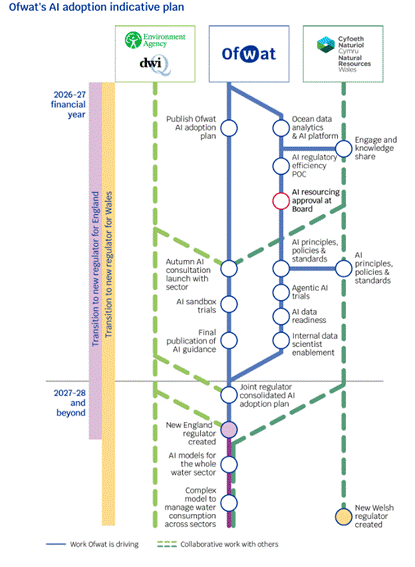
The plan sits against the backdrop of the following trends identified within the water sector:
Ofwat intends to take forward its approach during the transition through five core workstreams:
The plan identifies several constraints that will shape adoption:
Moving forward, Ofwat emphasised a collaborative, cross‑regulator approach, working with bodies such as the Environment Agency, Drinking Water Inspectorate, Natural Resources Wales and Natural England during the transition. The aim is to reduce duplication, streamline engagement with companies, and establish a consistent foundation for the future regulators.
If you would like to discuss how current or future regulations impact what you do with AI, please contact Tom Whittaker, Brian Wong, Lucy Pegler, Martin Cook, Liz Griffiths or any other member in our Technology team. For the latest on AI law and regulation, see our blog and newsletter.
 Thought leadership
24 June 2026
/Passle/5d9604688cb6230bac62c2d0/SearchServiceImages/2026-06-24-16-51-44-399-6a3c0b20750d17bab04b896e.jpg)
Thought leadership
24 June 2026
/Passle/5d9604688cb6230bac62c2d0/SearchServiceImages/2026-06-24-14-09-01-685-6a3be4fd2436e91d7166c7b4.jpg)

Thought leadership
22 June 2026
/Passle/5d9604688cb6230bac62c2d0/SearchServiceImages/2026-06-22-16-58-43-769-6a3969c30d7cd381c249adbf.jpg)
Thought leadership
22 June 2026
/Passle/5d9604688cb6230bac62c2d0/SearchServiceImages/2026-06-22-16-52-34-362-6a3968528540ef4ca2ad64dc.jpg)
/Passle/5d9604688cb6230bac62c2d0/SearchServiceImages/2026-06-19-10-11-02-066-6a3515b60566afd898481f66.jpg)
/Passle/5d9604688cb6230bac62c2d0/SearchServiceImages/2026-06-18-15-35-26-727-6a34103ec07839a636a61d41.jpg)

/Passle/5d9604688cb6230bac62c2d0/SearchServiceImages/2026-06-17-13-12-28-406-6a329d3c4a5ad1a810653fe8.jpg)
/Passle/5d9604688cb6230bac62c2d0/SearchServiceImages/2026-06-04-21-55-38-728-6a21f45a0863ccdba1020903.jpg)
Want more Burges Salmon content? Add us as a preferred source on Google to your favourites list for content and news you can trust.
Update your preferred sourcesBe sure to follow us on LinkedIn and stay up to date with all the latest from Burges Salmon.
Follow us