

 Thought Leadership
Consenting Data Centres – Draft National Policy Statement

10 Nov 2026
3 min read
This website will offer limited functionality in this browser. We only support the recent versions of major browsers like Chrome, Firefox, Safari, and Edge.
Thought Leadership
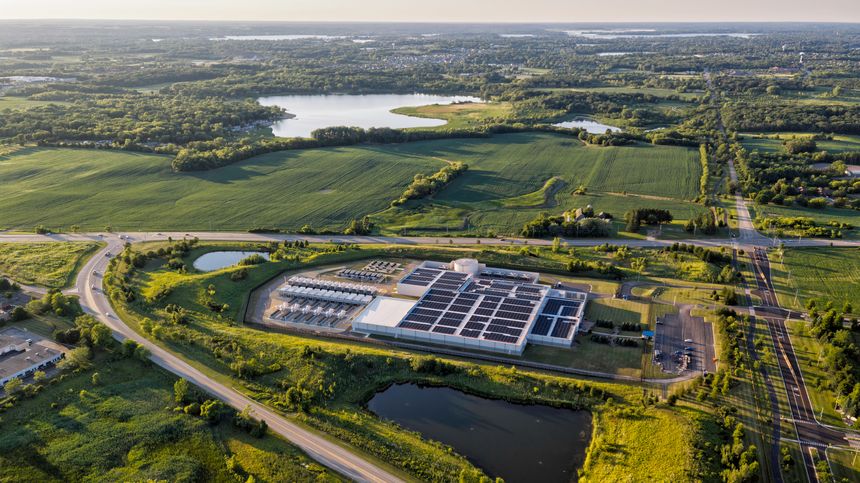


In September 2024 data centres were classed as UK Critical National Infrastructure. The National Planning Policy Framework (NPPF) published in August 2026 follows this and acknowledges that data centres are essential infrastructure.
The Department for Business, Innovation, Science & Trade has now published the long-awaited consultation on a National Policy Statement for Data Centres (Draft NPS). The consultation on the Draft NPS closes on 8 January 2027 and applies to England only. The document was accompanied by a sustainability appraisal and a habitats regulations assessment.
The Draft NPS outlines the policy tests data centre applications must meet under the Nationally Significant Infrastructure Project (NSIP) consenting route. The Draft NPS sets out that developers of data centres with a minimum operating rated IT load capacity of 100 MW may apply for project consent as an NSIP under section 35 of the Planning Act 2008, although smaller schemes could be accepted in exceptional circumstances.
The Draft NPS sets out a presumption in favour of consent for data centre projects provided that the Draft NPS requirements are met, the mitigation hierarchy is applied, and legal and regulatory requirements are met. However, this does not mean a DCO will automatically be granted consent, particularly where there are unacceptable impacts on protected habitats, public safety, flood or coastal risk, irreplaceable habitats, or green belt land.
The Draft NPS highlights the significant electricity demand associated with data centres. Whilst a secured grid connection is not a prerequisite to submitting a DCO application, the Draft NPS makes clear that an applicant will need to demonstrate progress towards securing a connection and identify how the data centre’s electricity requirements would otherwise be met.
The Draft NPS goes further than simply requiring the applicant to identify sufficient land, water, energy and air to operate. It expects the data centre to use those resources efficiently. Good design is expressly linked with minimising impacts on land, water, air and energy resources, and applicants are expected to achieve a minimum Power Usage Effectiveness of 1.3. Where an applicant does not adopt the most resource-efficient design, it must explain why, and the Secretary of State is expressly directed to consider that justification when determining the application. Similarly, measures which reduce energy and water consumption receive positive weight, and opportunities for waste heat reuse should also be considered. Where heat reuse is not pursued, the applicant should explain why it is not feasible.
In making its decision to grant development consent for a data centre, the Secretary of State must be satisfied that the applicant is taking steps to reduce the impact of the proposed development on climate change, the applicant's assessment of energy usage, and if using alternative energy generation sources, the applicant's assessment of emissions and steps taken to reduce emissions. The Secretary of State will also have regard to any impact on the security of supply for the energy system as well as expecting adverse environmental and community impacts to be appropriately avoided, mitigated or compensated.
The Draft NPS aligns applications with the government's proposed data centre covenant which was published on the same day and you can read our thoughts on that here.
The consultation on the Draft NPS closes on 8 January 2027 and we would encourage anyone looking to develop a data centre to respond. If you have any queries about responding or consenting a data centre, please contact Cathryn Tracey.
 Thought leadership
6 November 2026

Thought leadership
5 November 2026






Thought leadership
3 November 2026


Want more Burges Salmon content? Add us as a preferred source on Google to your favourites list for content and news you can trust.
Update your preferred sourcesBe sure to follow us on LinkedIn and stay up to date with all the latest from Burges Salmon.
Follow us