

 Thought Leadership
Disclosure – Suspect fraud? Don’t count on seeing the other side’s documents before you sue

26 Nov 2026
4 min read
This website will offer limited functionality in this browser. We only support the recent versions of major browsers like Chrome, Firefox, Safari, and Edge.
Thought Leadership
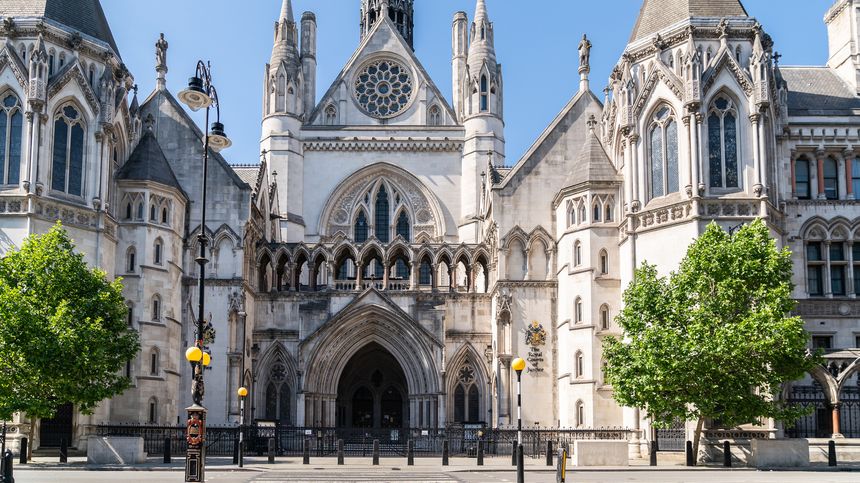


In Union Bancaire Privée, UBP SA v L Catterton Europe SAS [2026] EWHC 2041 (Comm), the Commercial Court refused an investor’s application for pre-action disclosure, specifically to see documents held by the other side before starting a fraud claim. Although every threshold requirement in CPR 31.16(3) was met, the judge declined to make an order as a matter of discretion.
What happened?
Union Bancaire Privée (“UBP”) proposes to bring a fraud claim over its investment in a business that later ran into serious operational and financial difficulties. It alleges that senior individuals at L Catterton Europe SAS (“LCE”) knew that valuation statements made to UBP were, or had become, materially untrue, yet knowingly or recklessly failed to correct them before UBP invested. UBP sought disclosure of documents revealing what LCE knew about the business’s problems, and when.
The judge was satisfied that both sides were likely to be parties to a future claim and the requested documents would fall within standard disclosure if proceedings had started. She also found a real prospect that early disclosure would assist with the fair disposal of any proceedings, facilitate settlement, and save costs whether through earlier settlement or by reducing the likelihood of later amendments to the pleadings. Even so, she refused the order as an exercise of her discretion.
The judge’s reasoning
UBP could already plead its claim: Information asymmetry (where one party has more relevant information than the other) is common in misrepresentation claims and was no reason to order pre-action disclosure where, as LCE accepted, UBP already had a claim that would survive a strike-out application. Nor did fraud’s strict pleading rules assist UBP: they may justify early disclosure where a claimant could not otherwise set out its case, but UBP could. The prospect of a more precise claim also carried little weight, since early disclosure was unlikely to avoid entirely the need for later amendments.
Scale of the request: The breadth of UBP’s requests seemed to weigh heavily against an order for pre-action disclosure. According to LCE’s evidence, the proposed exercise could involve 17 custodians, over 700,000 documents and total costs of approximately £325,000 excluding VAT. Even if the estimate was overstated, the judge found the exercise relatively extensive and expensive. The application did not involve a narrow or focused request for a small number of specific documents. The judge concluded it would be more proportionate to undertake after proceedings had been issued, through the usual disclosure process under Practice Direction 57AD (PD57AD).
UBP proposed narrower searches, but only if two senior LCE individuals confirmed in a statement of truth that they were not aware of any other relevant documents. The judge found that LCE’s lawyers would almost inevitably advise against giving such statements without a significant document review. The condition therefore defeated the purpose of the narrower searches.
Pre-action conduct: The judge found that LCE had failed to comply with the pre-action rules because it did not engage with the substance of UBP’s letter before action or provide certain documents. That may cost LCE later in the proceedings, and such a breach can justify early disclosure of narrow, easily identified documents (as in Dennis v Queenwood), but not a large review of the kind UBP sought.
Not a route around PD57AD: UBP argued that it needed to plead more precisely because PD57AD seeks to confine disclosure more narrowly than standard disclosure. According to UBP, there was a risk that, without pre-action disclosure, disclosure ordered under PD57AD would not cover all the documents it would have been entitled to under standard disclosure in CPR 31.6, which was a reason why the order was appropriate. The judge rejected this for two reasons. First, given the realistic scope of the disclosure exercise UBP’s order would require, the argument, even if correct, would not weigh heavily enough to justify the order. Second, it was wrong in principle: an applicant that can already plead should not use pre-action disclosure to obtain more than PD57AD would give it in the proceedings. That would be inconsistent with the overriding objective of dealing with cases justly and at proportionate cost, the current approach to disclosure under PD57AD, and case law emphasising that pre-action disclosure requests should be narrow and focused.
Key takeaway: Pre-action disclosure remains unusual in commercial cases, and the court retains discretion, including to refuse it.
For more information about the law, technology and practice of disclosure, contact Tom Whittaker or Stacie Bourton.
 Thought leadership
24 November 2026

Thought leadership
24 November 2026

Thought leadership
19 November 2026


Thought leadership
16 November 2026

Thought leadership
30 October 2026

Thought leadership
8 October 2026

Thought leadership
25 August 2026

Thought leadership
18 August 2026

Thought leadership
28 July 2026

Want more Burges Salmon content? Add us as a preferred source on Google to your favourites list for content and news you can trust.
Update your preferred sourcesBe sure to follow us on LinkedIn and stay up to date with all the latest from Burges Salmon.
Follow us