

 Thought Leadership
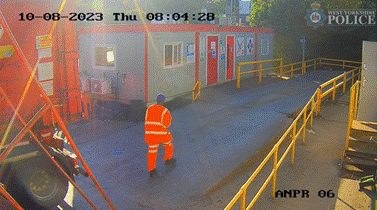
H&S Bites 1: Capturing and acting on evidence of safety ‘in practice’

5 May 2026
3 min read
This website will offer limited functionality in this browser. We only support the recent versions of major browsers like Chrome, Firefox, Safari, and Edge.
Thought Leadership
/Passle/5d9604688cb6230bac62c2d0/SearchServiceImages/2026-05-05-08-23-35-721-69f9a9078669ee990ac58d25.jpg)


In the last 12 months, five organisations have received fines of over £1.5M for health & safety related offences. Across May, we are delivering bite-sized thoughts on practical lessons from these cases, as well as some interesting trends identified by our Health & Safety specialist team, part of our wider Corporate crime and investigations team.
Key facts:
Practical Thoughts:
If you'd like to receive occasional H&S risk round-ups directly to your mailbox then please scroll to the bottom of this link and join our mailing list.
Read our next article in the series here: H&S Bites 2: Effective Risk Reduction: Using an evidence-informed approach and applying the ‘hierarchy of control’ - Burges Salmon
“Health and safety management is an ongoing process, not a one-off task. It is not enough to just control the risks in your business, you must make sure that they stay controlled.”
/Passle/5d9604688cb6230bac62c2d0/SearchServiceImages/2026-10-21-12-37-31-522-6ad8b20b9123389ce94e1751.jpg)
 Thought leadership
20 October 2026
/Passle/5d9604688cb6230bac62c2d0/SearchServiceImages/2026-10-20-09-01-00-687-6ad72dcc184b5ba351cfab1a.jpg)
/Passle/5d9604688cb6230bac62c2d0/SearchServiceImages/2026-10-15-13-05-28-196-6ad0cf98df7274b81171a69e.jpg)
Thought leadership
13 October 2026
/Passle/5d9604688cb6230bac62c2d0/SearchServiceImages/2026-10-13-13-19-48-365-6ace2ff48209d8ca9829f759.jpg)

Thought leadership
13 October 2026
/Passle/5d9604688cb6230bac62c2d0/SearchServiceImages/2026-10-12-20-57-46-955-6acd49ca3a2af6187605cf2d.jpg)
Thought leadership
7 October 2026
/Passle/5d9604688cb6230bac62c2d0/SearchServiceImages/2026-10-07-13-24-03-610-6ac647f33724c91c5285c5bc.jpg)
Thought leadership
6 October 2026
/Passle/5d9604688cb6230bac62c2d0/SearchServiceImages/2026-10-01-08-26-21-346-6abe192d2c56fe52ab54ca29.jpg)
Legal updates
1 October 2026

Thought leadership
1 October 2026
/Passle/5d9604688cb6230bac62c2d0/SearchServiceImages/2026-09-17-16-44-01-145-6aac18d13163f6587eb96e08.jpg)
Want more Burges Salmon content? Add us as a preferred source on Google to your favourites list for content and news you can trust.
Update your preferred sourcesBe sure to follow us on LinkedIn and stay up to date with all the latest from Burges Salmon.
Follow us