

 Thought Leadership
How do UK companies report on AI adoption, risks and harms?

26 May 2026
3 min read
This website will offer limited functionality in this browser. We only support the recent versions of major browsers like Chrome, Firefox, Safari, and Edge.
Thought Leadership
/Passle/5d9604688cb6230bac62c2d0/SearchServiceImages/2026-05-23-21-10-24-514-6a1217c04e599ab19eaac920.jpg)


An observatory has been launched to track “AI-related risk, adoption, and third-party AI exposure across UK public-company annual reports” with a focus on Critical National Infrastructure (CNI) sectors.
The observatory is sponsored by the UK's AI Security Institute. It is currently in beta - i.e. a near complete version which is in final testing phase - but provides a useful source and indicative information about not only how UK companies are reporting on these issues, but the underlying issues themselves.
The observatory:
According to Andrew Sutton who helped lead the research:
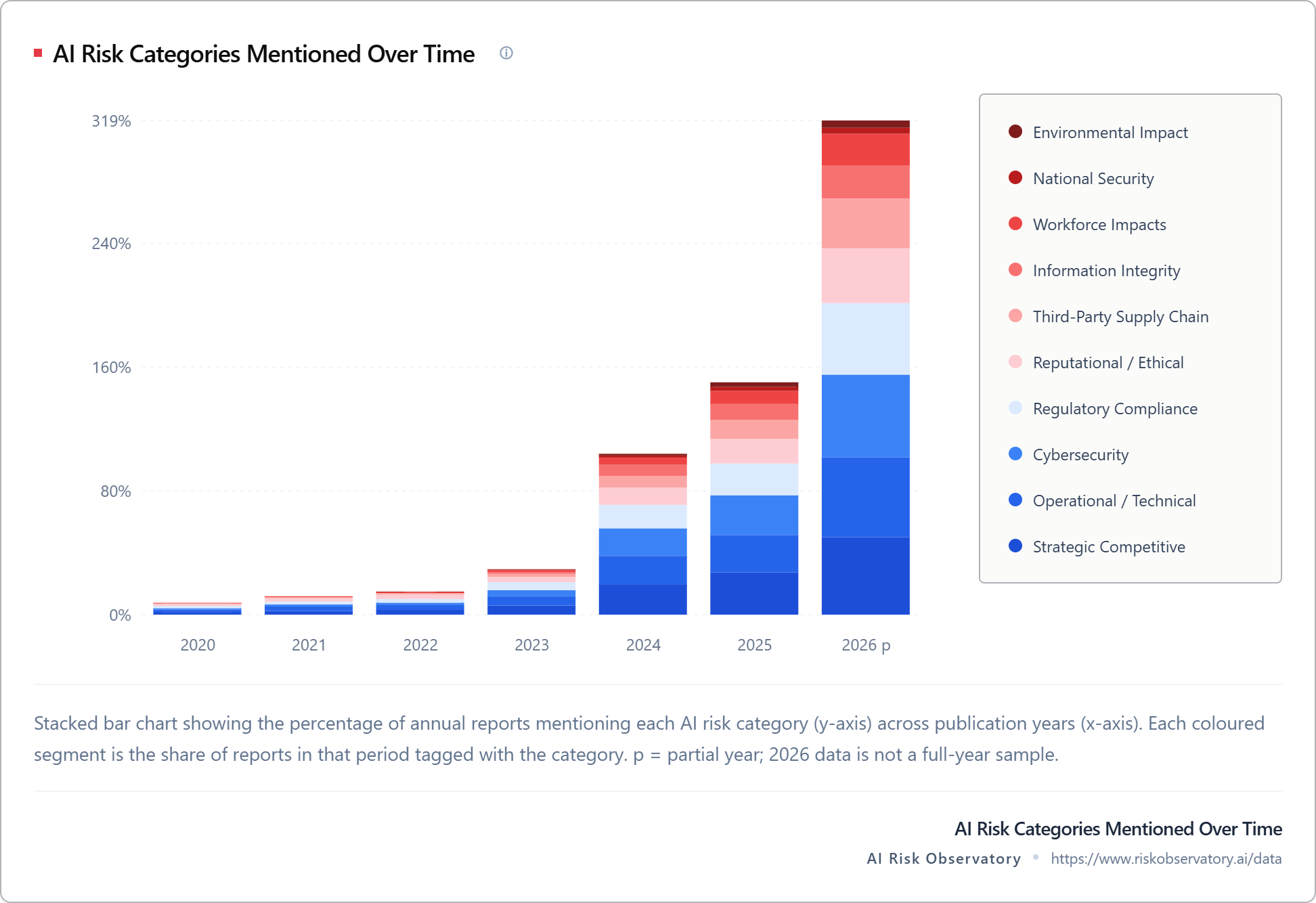
- AI risk mentions took off from 2023 and never looked back. From 3% of reports in 2020 to 67% in 2026 to date. Strategic pressures, cyber threats and operational risks are the top risks disclosed.
- as mentions become more frequent, they have also become more generic
- disclosure varied a lot between sectors: reflecting different risk profiles or different attitudes to disclosure?
- just seven reports disclosed an actual AI-related harm.
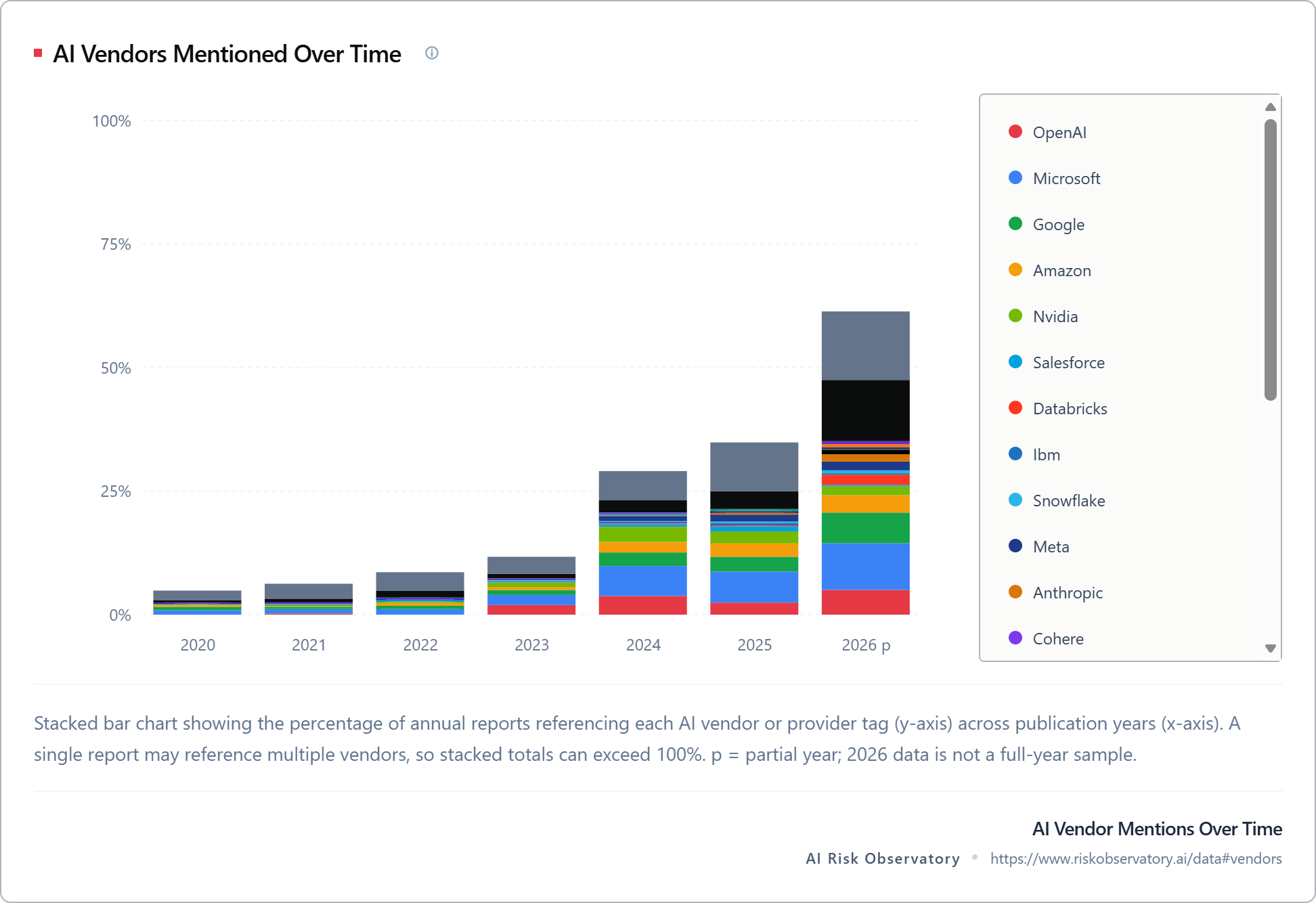
- Microsoft is the most-mentioned AI vendor, but with firms increasingly mentioning self-developed systems.
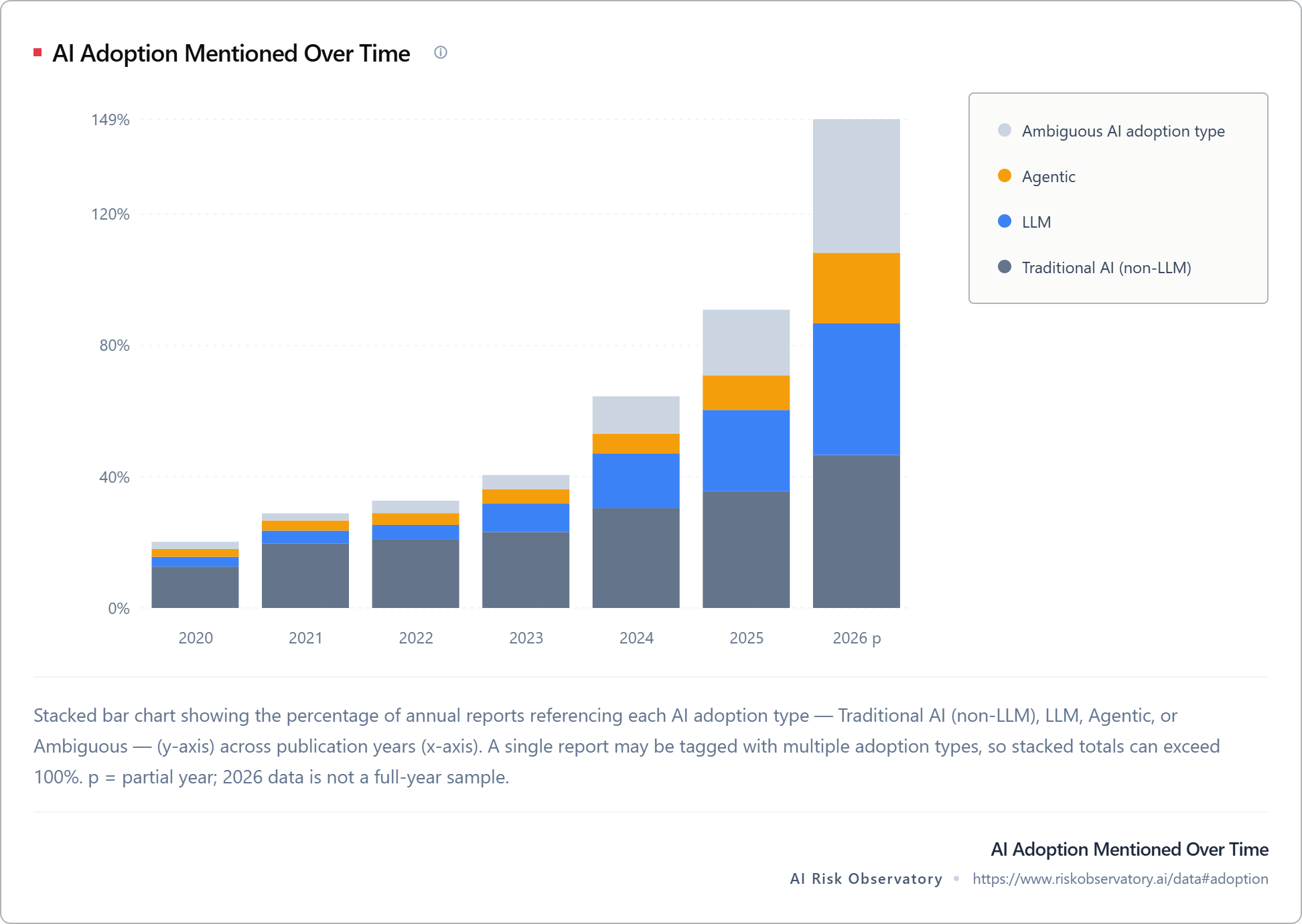
The full dashboard is here and includes useful trend charts and sector heatmaps, such as those below.
Note that the observatory explains ‘publication year’ as follows:
Years on the x-axis reflect when the report was filed or published, not the end of the company's fiscal year. A report covering fiscal year 2021 but published in April 2022 will appear under 2022. This is consistent across the entire dataset.
This appears to mean that figures in 2026 reflect the year a company's accounts were published, which may relate to a company's accounts for 2025. Consequently, there is a lag in the data. Further information is available in the dashboard and methodology.
If you would like to discuss how current or future regulations impact what you do with AI, please contact Tom Whittaker, Brian Wong, Lucy Pegler, Martin Cook, Liz Griffiths or any other member in our Technology team. For the latest on AI law and regulation, see our blog and newsletter.
Citation: AI Risk Observatory Dataset (v1.0), AI Security Institute, April 2026.
 Thought leadership
24 July 2026
/Passle/5d9604688cb6230bac62c2d0/SearchServiceImages/2026-07-24-14-49-12-411-6a637b68ac33e1303230d49a.jpg)
/Passle/5d9604688cb6230bac62c2d0/SearchServiceImages/2026-07-22-16-28-17-624-6a60efa1f739d4b2969c17e5.jpg)
Thought leadership
21 July 2026
/Passle/5d9604688cb6230bac62c2d0/SearchServiceImages/2026-07-21-18-40-24-260-6a5fbd1870261d54eb6209d6.jpg)
Thought leadership
21 July 2026
/Passle/5d9604688cb6230bac62c2d0/SearchServiceImages/2026-07-21-14-52-58-564-6a5f87ca04566971c880527c.jpg)
Thought leadership
7 July 2026
/Passle/5d9604688cb6230bac62c2d0/SearchServiceImages/2026-07-07-22-16-55-543-6a4d7ad7306816e16463a5ce.jpg)
/Passle/5d9604688cb6230bac62c2d0/SearchServiceImages/2026-07-07-21-42-22-719-6a4d72be306816e1646335a9.jpg)
/Passle/5d9604688cb6230bac62c2d0/SearchServiceImages/2026-07-06-11-38-30-253-6a4b93b609614af897eb361c.jpg)
Thought leadership
1 July 2026
/Passle/5d9604688cb6230bac62c2d0/SearchServiceImages/2026-07-01-15-12-51-730-6a452e73eb7326b3e7a3f662.jpg)
Thought leadership
24 June 2026
/Passle/5d9604688cb6230bac62c2d0/SearchServiceImages/2026-06-24-14-09-01-685-6a3be4fd2436e91d7166c7b4.jpg)
Thought leadership
22 June 2026
/Passle/5d9604688cb6230bac62c2d0/SearchServiceImages/2026-06-22-16-58-43-769-6a3969c30d7cd381c249adbf.jpg)
Want more Burges Salmon content? Add us as a preferred source on Google to your favourites list for content and news you can trust.
Update your preferred sourcesBe sure to follow us on LinkedIn and stay up to date with all the latest from Burges Salmon.
Follow us