

 Legal updates
Reforms to accelerate critical electricity network infrastructure

3 Jun 2026
5 min read
This website will offer limited functionality in this browser. We only support the recent versions of major browsers like Chrome, Firefox, Safari, and Edge.
Legal updates
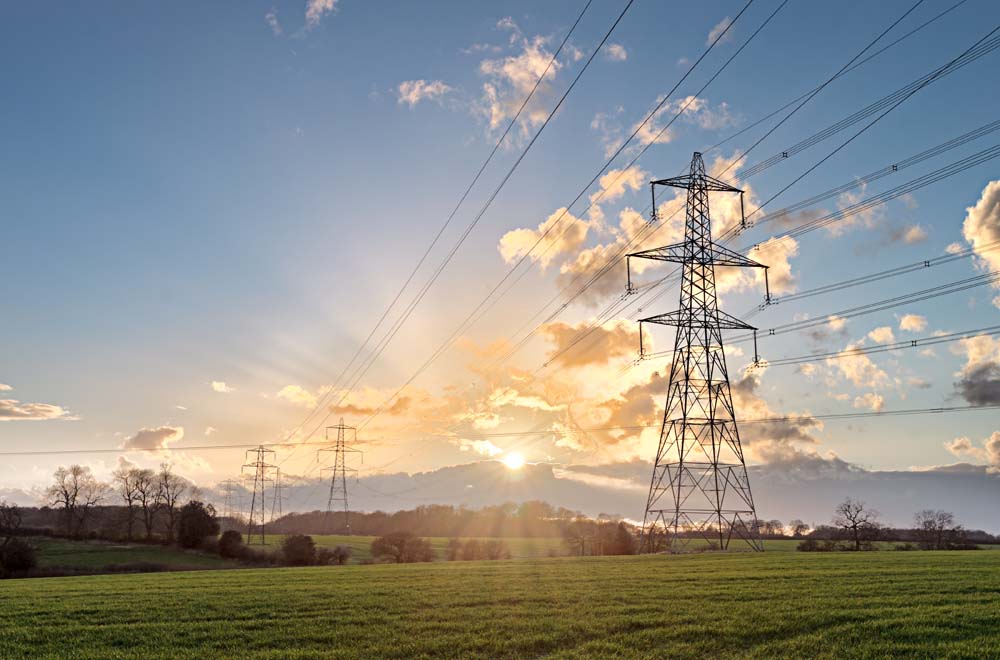


In July 2025, the Department for Energy Security and Net Zero (DESNZ) launched an eight-week consultation on changes to land access, rights and consents processes for electricity network infrastructure to support the transition to Net Zero and secure Clean Power by 2030 (the “Consultation”).
DESNZ published its Consultation response on 21 April 2026, confirming the implementation of a wide range of reforms designed to reduce delays and costs, and accelerate the delivery of clean energy, with the aim of meeting the UK’s targets of clean power by 2030 and becoming net zero by 2050.
The Government is taking forward all proposals that were outlined in the Consultation. Stakeholder feedback indicated that the Consultation proposals alone would not be enough to deliver the pace and scale of network build required to support clean power targets. Accordingly, additional measures, as an evolution of the original proposals, have been developed and implemented.
The most important areas of reform to our mind relate to NSIP thresholds and access rights.
Nationally Significant Infrastructure Projects threshold
Several reforms have been introduced to ensure that the NSIP regime is reserved for genuinely national-scale projects. Single circuit 132kV wooden and successor material (such as composite polymer) pole lines are to be removed from the scope of the NSIP regime. Additionally, the distance threshold for OHL projects to be classified as NSIPs will be increased from 2km to 15km, aligning it with the automatic requirement for an Environmental Impact Assessment.
The definition of a “single continuous overhead line” will be clarified to further limit those projects meeting the NSIP threshold, while voltage‑increase projects crossing protected sites will instead be handled under Section 37.
The reforms are intended to reduce the burden on the NSIP system and accelerate the delivery of medium‑scale network upgrades.
Access rights
The Government will expand and clarify statutory access rights to ensure network operators can reach existing and new infrastructure efficiently, while ensuring mitigations are in place to protect landowners. Access rights will explicitly extend to all land necessary to reach assets, including third‑party land. Transmission owners will gain statutory access powers similar to those already held by distribution network operators.
The reforms will include enhanced compensation rules, longer notice periods for major works, clear guidance on rights and responsibilities, and restrictions on when powers can be used. These changes aim to reduce delays caused by access disputes while ensuring fairness and transparency.
Other main areas of change include:
Necessary wayleaves
Reasoning must be provided when serving a Notice to Remove, using prescribed forms. Temporary continuation is to be extended from three to six months. Powers will be introduced to close dormant cases and the standard wayleave term extended to 40 years.
Tree lopping and felling
Electricity licence holders will become responsible for tree maintenance, with statutory entry rights, though may delegate works to landowners.
Permitted development rights for substations
Permitted development size for substations is to be increased, albeit the largest substations will require Local Planning Authority approval regarding siting and appearance.
Section 37 consenting for Overhead Lines (OHL)
Section 37 consent is to no longer be required for voltage upgrades to 11 kV, for OHLs serving up to four consumers, nor increases to wooden support heights and upgrades from single to three phase OHLs. Allowable distance for OHL diversions is to be increased.
Private streets
Consent from private street or road authorities will no longer be required before opening streets to lay and/or maintain electricity cables.
The Government has indicated that reforms to primary and secondary legislation will commence before the end of the year. Guidance will be produced and updated as the relevant changes are made.
The reforms are intended to enable the electricity network to expand at a faster pace required for the UK’s clean‑power and net‑zero commitments. By widening access rights, simplifying consenting regimes, and removing avoidable planning barriers, the reforms in theory should cut the delay to, and prevention of, electricity network infrastructure projects. Higher NSIP thresholds will free up planning capacity for critical infrastructure projects under the NSIP regime, while also ensuring smaller projects that no longer fall under the revised thresholds can be pushed through at lower cost and faster speeds. Our reservation is whether taking those projects out of the NSIP regime will lead to faster consenting periods in aggregate across network portfolios, but with sufficient resourcing the theory behind that change is clearly understandable. Implementation, as ever, will be critical.
Taken together, these measures aim to set out a more predictable, faster and coordinated framework for grid development – enabling efficient delivery of critical infrastructure projects which are necessary to meet the clean power 2030 and net zero 2050 targets. The practical impact on these targets will depend on how these changes interact with the wider volume of ongoing consenting reforms.
We have extensive experience in advising on electricity network infrastructure, so please contact Alex Minhinick or Craig Shearer if you have any queries.

 Legal updates
22 September 2026

/Passle/5d9604688cb6230bac62c2d0/SearchServiceImages/2026-09-21-08-50-38-767-6ab0efdeff282ca5b388e346.jpg)
Thought leadership
17 September 2026
/Passle/5d9604688cb6230bac62c2d0/SearchServiceImages/2026-09-17-11-35-47-985-6aabd0933163f6587eb86c43.jpg)
/Passle/5d9604688cb6230bac62c2d0/SearchServiceImages/2026-09-17-11-22-53-614-6aabcd8d4a11247c3619743d.jpg)
Thought leadership
17 August 2026
/Passle/5d9604688cb6230bac62c2d0/SearchServiceImages/2026-08-17-12-49-11-457-6a8303477533d54440c5b4d4.jpg)
Thought leadership
17 August 2026
/Passle/5d9604688cb6230bac62c2d0/SearchServiceImages/2026-08-17-10-55-37-033-6a82e8a98f6deb11a13873e8.jpg)
Thought leadership
3 August 2026
/Passle/5d9604688cb6230bac62c2d0/SearchServiceImages/2026-08-03-07-39-44-749-6a7045c034529557b8bb2593.jpg)
/Passle/5d9604688cb6230bac62c2d0/SearchServiceImages/2026-07-30-17-42-42-066-6a6b8d12e94c938b93bf2d40.jpg)
Want more Burges Salmon content? Add us as a preferred source on Google to your favourites list for content and news you can trust.
Update your preferred sourcesBe sure to follow us on LinkedIn and stay up to date with all the latest from Burges Salmon.
Follow us