

 Podcasts
ERA Explained podcast: Unfair dismissal changes – managing probationary periods

1 Jul 2026
7 min read
This website will offer limited functionality in this browser. We only support the recent versions of major browsers like Chrome, Firefox, Safari, and Edge.
Podcasts
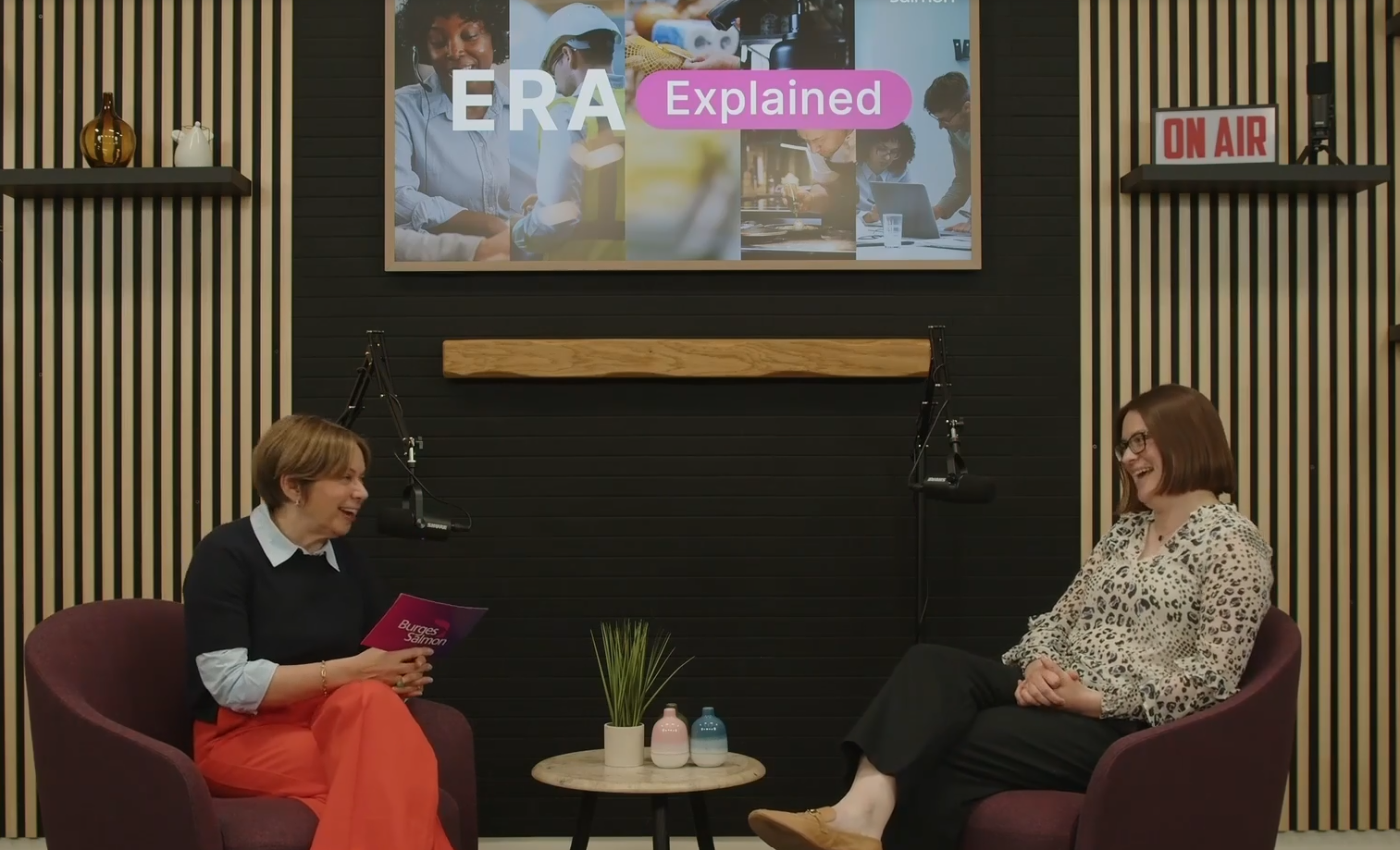


In the first episode of our ERA Explained podcast, Kate Redshaw and Katie Wooller discuss how employers should approach probationary periods when the qualifying period for unfair dismissal drops from two years to six months on 1 January 2027. In this short, bite-sized episode, they also highlight the risks for employers, and the practical steps organisations should be thinking about now – from updating contracts and internal processes through to proactive management of senior hires.


Your go-to resource on the incoming reforms and what they mean for employers.
Visit our hubKate Redshaw, Head of Practice Development, Burges Salmon (00:10)
Hello and welcome to our podcast, The ERA Explained, where we’ll be looking at the key reforms contained in the Employment Rights Act and what they mean for employers. My name is Kate Redshaw and I’m in the Employment team at Burges Salmon. And in this series, we’ll be looking at what I think is probably the most significant reform for employers, and that is the reduction of the qualifying period for unfair dismissal from two years to six months and the removal of the compensation cap in relation to that claim. And today we’re going to be looking at the impact of that reform on probationary periods.
And to join me to talk about that, I’m delighted to introduce my colleague, Katie Wooller. And Katie, I think you probably quite like me to introduce you as a certified Employment Rights Act super fan.
Katie Wooller. Professional Support Lawyer, Burges Salmon (01:01)
Super fan, super nerd. I take all descriptions.
Kate Redshaw (01:04)
All the geeks, all the descriptions… Excellent, well in that case we’re in very safe hands.
Katie Wooller (01:10)
No pressure then
Kate Redshaw (01:13)
So Katie, I think before we get stuck into some of the practicalities on the probationary period, what I’d like to do is just could you possibly flag when this new reform is coming into force, because actually there’s a little nuance in there which people may not be aware of.
Yeah, absolutely. As you say, there’s something that could quite easily trip up employers if they weren’t sort of on top of it. So, the reforms coming into effect on the 1st of January next year. But it’s important to note that it’s coming into effect with immediate effect, applying to anyone at that point in time. So if you’ve got six months or more service on the 1st of January, you will immediately benefit from ordinary unfair dismissal rights. So what that means is if you recruit someone on the 1st of July this year, then they will straight away at six months on the 1st of January next year be entitled to bring an ordinary unfair dismissal claim and similarly if you recruit someone in say October then once they reach six months which I think by my maths would be next April, yeah, then there’s going to be, they’re going to have that entitlement at that point.
Kate Redshaw (02:16)
Okay, so it’s not six months from 1st January, it’s six months.
Katie Wooller (02:19)
No, it’s six months for each person, their own service, whenever they reach that milestone after the 1st of January 2027.
Kate Redshaw (02:28)
Okay, good, so that could be a little nasty one people could get caught out on. So I think my next question then Katie is, because we know there is a lot of talk about probationary periods and what the reform means, I suppose if you if you accept that most employers maybe have six months probationary period, I know there are some people have shorter than that but six months is not uncommon Sometimes longer and sometimes with the possibility of extending. What’s the issue here? Why are people talking about reducing probationary periods?
Katie Wooller (02:59)
Yeah, you’re absolutely right. That’s probably the most common question that’s coming up for us on this topic at the moment. The issue is if you have a six month probationary period, if you were to look to dismiss someone at the end of that period because it’s not working out, if you do that right at the end, you’ve got a real risk for a variety of reasons that they will have six months qualifying service. So that may well be delays if someone is ill, whether it’s the manager or the employee, even you’ve got that meeting just before they get to the six month period.
But also, I should mention this little quirk, so if you were to dismiss someone, so pay them in lieu of notice, again, right at the end of that sort of five and a bit more than five and a half months, then you add on that statutory minimum notice to determine their qualifying service for the purposes of ordinary unfair dismissal. So that could tip someone over that six month period.
Kate Redshaw (03:52)
So even if you’ve paid in lieu, they’ve got an entitlement, but they’re only entitled to add on that one week statutory notice. If I had say four weeks’ notice in my contract, I can’t add on the full four weeks. It’s just that one week statutory notice. I suppose the reason why people are talking about this then is because they want to, as you say, give themselves a bit of leeway. So you’re not suddenly thinking, I’m going to hit that six month qualifying period tomorrow.
Katie Wooller (04:05)
And I guess the other reason that people are looking or lots of employers are looking to shorten their probationary periods is to build in time for extensions because it’s not uncommon for probationary period processes to have the potential to have an extension. Again, if you want that extension to fall safely within that six month period with a buffer for the reasons I’ve just said, then you might be looking to reduce your probationary period down.
Kate Redshaw (04:42)
So, I guess Katie I understand the rationale for reducing probationary periods. I guess the issue you then run across is that three, four months is not very long by anybody’s standards to assess whether somebody is doing the job sufficiently well, not least because some onboarding processes can take a month, some jobs are complex and so on. So what if that period of time is simply not long enough for us to be able to assess the performance?
Katie Wooller (05:13)
Yeah, it’s a really good reminder, I think, that whilst we are talking about this sort of maximum six month period for qualifying service, it isn’t the end of the world if we’re looking to, if we’re on the fence about someone, we think they’ve got promise, we think they’re performing most of their role, but perhaps we can’t quite assess something because maybe it’s a project with a really long lead in time. If we’re going to take them past that six month period, there’s nothing wrong with that. All that we need to be mindful of if we’re doing that is that any sort of issues down the line if their performance isn’t up to scratch will need to be dealt with in the normal way. So with the sort of full performance process, the full dismissal process. So I think there’s a bit of a risk of sort of scaremongering and almost panicking line managers, which is obviously the last thing employers want to do, that they must make a decision on an employee’s sort of suitability for a role. They must always do that before the six month period. That’s not going to be the case. It’s more about knowing that if you’re going to take someone past that six month period and there are issues down the line then you’ll need to go through a fuller process.
Kate Redshaw (06:18)
Because you’ve still got that six months. If you reduce your probationary period to say four months, you’ve still got, and you pass the person, you’ve still got another two months to continue to look at performance, haven’t you?
Katie Wooller (06:31)
You have as well and it may well be if you have four months then you might extend if you’re not quite sure you could extend by a month but just being mindful of those sort of quirks I was saying as to not inadvertently tipping past, that six month point
Kate Redshaw (06:44)
I know absolutely and you’ve mentioned line managers a few times, now I fear and we are I think going to be doing a separate podcast on this, but I fear actually this is going to be, you know there’s going to be, some serious heavy lifting for line managers on this isn’t there?
Katie Wooller (07:00)
Yeah, definitely. I mean, I think it’s probably fair to say that in lots of cases at the moment, probationary periods are usually kind of almost for red flag sort of issues. So really significant underperformance or kind of major attitude sort of problems with an employee. But I think that’s really going to have to change. And realistically, it’s the line manager who is going to have the best knowledge of how someone’s performing.
So, yes, a lot of emphasis is going to be on the line manager role and to me I think that’s sort of twofold. So, one would be they’ve got to be really clear with the employee and going back to your point from before and realistic as to what the expectations are within that probationary period and then obviously monitoring sort of performance against those sort KPIs or sort of expectations and then on a secondary, the second thing they really need to be mindful of is the timing.
We all know that probationary period reviews can sort of slip a bit, might move with holidays and that kind of thing and I think that’s probably a joint line manager and HR sort of responsibility is to really put those reminders in diaries as to when the mid-probationary period review needs to be, when the end of probationary period review needs to be and just hammering home the importance of doing those on time, so that you know you’re again you know what you don’t want is to inadvertently be having delays in the process.
Kate Redshaw (08:26)
No, and you definitely want to know when that six month period is up.
Katie Wooller
Yes, absolutely.
Kate Redshaw
And be having that discussion ahead of time just to check in as to whether the person is going to continue beyond that date.
Katie Wooller (08:37)
Yeah, and as I said, think that’s a bit of dual HR and line manager working together to make sure they’re on top of the timings and how the person’s performing.
Kate Redshaw (08:44)
Lots of calendar appointments coming up I feel.
Katie Wooller
A lot.
Kate Redshaw
Actually music to your ears, we do love a calendar appointment.
Now that is all very helpful. There’s a little issue I’d quite like to discuss with you and that’s around all of this applies to all employees. So it will also apply to senior leaders, management teams and so on who may not be so used to having even probationary periods, let alone kind of rigorous, you know, checking in on whether they’re doing what’s expected of them. And of course, we’ve also, which I mentioned right at the start, we’ve also got the removal of the compensation cap for unfair dismissal, which ups the ante if you’re dismissing, you know, a senior or expensive hire after that six month period and we’re going to be talking about that in another episode but Katie in terms the sort of the probationary period point what are your thoughts on how that applies to senior leadership teams?
Katie Wooller (09:42)
Yeah, as you say, that I think is possibly where there’s going to be the biggest sort of sea change. Because, as you say, the stakes are really going to be so much higher once someone in a senior or a highly paid role gets past that six month period and qualifies for unfair dismissal. As you say, we’ll talk about all the nuances of that and how that fits into sort of equity entitlements and that kind of thing. But it does mean that there’s a little bit more emphasis, or there could be a bit more emphasis, it’s going to be a commercial decision as to whether the business wants to put that in place, but on making sure someone is the right fit in that initial period before they qualify for that.
That comes with all sorts of practical difficulties of what obviously one of the things is in that kind of role, often you’re looking at quite a long period of time within which you might be brought into sort of turn around the prospects of a business or an arm of the business and you can’t do that often within six months. So, how are you going to assess how someone’s doing in that period of time? What are the, again, what are the performance expectations?
Kate Redshaw (10:53)
And also I guess who is going to be doing the assessing? [Katie: Absolutely]. If you’ve got a chief exec who is going to be sitting there going, so it’s your mid-seat review.
Katie Wooller (11:01)
Yeah, and as you say, the execs are often not used to that level of sort of day-to-day scrutiny. So I think it’s going to be a real change.
Kate Redshaw (11:12)
I mean, I suppose ultimately, as you said earlier on, it’s a commercial decision, isn’t it? It’s being aware that there is a risk there, that if you go over the six months and it doesn’t work out, the financial stakes potentially are quite high. And so it’s then a sort of decision to be taken at a strategic level as to how on it, if you like, you want to be in terms of reviewing performance within that six month period. I have no doubt personalities will come into it, what the person’s been brought in to do and so on and different organisations will have different approaches.
Katie Wooller (11:43)
Yeah, absolutely. You pick up on a really important point there around sort of the strategy of it. As you say, the value of an ordinary unfair dismissal claim for a senior person is going to go up. But also, I think that might lead to perhaps more protracted sort of exit negotiations. The other thing businesses might want to look at is having a think about that sort of settlement sort of strategy and approach. I know we’ll probably come on to that in a lot more depth when we look at sort of the removal of cap and the impact on senior and high paid roles but that’s another thing I’d be looking at sooner rather than later.
Kate Redshaw (12:19)
Yeah, yeah, at least giving some thought to it. Now Katie, you like calendar appointments, I think the other thing you also like is documentation, which brings me neatly on to your contracts of employment because, you know, probationary periods need to be included in your Section 1 statement, so in your contract of employment. So what sort of changes might people need to be thinking about in terms of their template contracts?
Katie Wooller (12:48)
Yeah, you’re absolutely right. You need to state whether there is a probationary period in your contract and how long it is. So if you’re making any change to it, obviously that will need to be made in the contract. Perhaps more significantly, it’s not uncommon for there to be various things that are linked to passing of the probationary period. So that might be a shorter period of notice. So say one week’s notice during that during probation and then longer after that, or it might be benefits, so private medical, that kind of thing. There isn’t a requirement for those two to dovetail, there’s going to be a sort commercial call to be made as to whether you just have a straightforward period of time, qualifying period of time for those benefits and for that notice, or whether you do want to still link it to passing of the probation. So either way, you’ll need to have a look at your contract of employment and sort of check that it lines up with what you want to offer. But as I say, they don’t have to dovetail.
Kate Redshaw (13:43)
No, which is an important point, but you do need to be, on it with your sort of, dare I say it, your calendar to make sure that, you know, if somebody, if they don’t dovetail, that the right things are kicking in at the right time.
Katie Wooller (13:53)
Absolutely, obviously on some things like certain benefits you’d obviously need to check things like your schemes. Good point. And your insurance just to check that will need to dovetail.
Kate Redshaw (14:03)
Yes. Right, well, I think that brings us to the end of this podcast. What I’d like to just sort of wrap up with Katie, is just the key takeaways for employers.
So what I have gleaned from this is review my probationary period to see if I need to reduce it, train my line managers so that they know the importance actually of this reduction in the qualifying period and what that means on the ground, consider my senior leadership and management strategy. Do I want to start to sort of review more closely during those? Well, not just during the first few months of employment, but particularly during the first few months of employment. And finally, to review contracts of employment to see what changes I might need to make to those.
Excellent. OK, so that brings us to the end of today’s podcast. Thank you so much for joining us and do watch out for more episodes. Thank you.
Katie Wooller
Thank you.
 Thought leadership
24 August 2026
/Passle/5d9604688cb6230bac62c2d0/SearchServiceImages/2026-08-24-10-27-31-080-6a8c1c933e2fa9fe804576d4.jpg)


/Passle/5d9604688cb6230bac62c2d0/SearchServiceImages/2026-08-11-10-49-30-484-6a7afe3ae4134dc2146e9464.jpg)

Thought leadership
29 July 2026
/Passle/5d9604688cb6230bac62c2d0/SearchServiceImages/2026-07-29-15-32-34-430-6a6a1d12c76f2a1ae0402129.jpg)
/Passle/5d9604688cb6230bac62c2d0/SearchServiceImages/2026-07-23-10-04-46-070-6a61e73ee61f23f448d3412c.jpg)

Thought leadership
23 July 2026
/Passle/5d9604688cb6230bac62c2d0/SearchServiceImages/2026-07-23-11-02-01-782-6a61f4a9e61f23f448d3dc17.jpg)
Thought leadership
16 July 2026
/Passle/5d9604688cb6230bac62c2d0/SearchServiceImages/2026-07-16-10-35-29-572-6a58b3f1db6a1455f650fad2.jpg)
Want more Burges Salmon content? Add us as a preferred source on Google to your favourites list for content and news you can trust.
Update your preferred sourcesBe sure to follow us on LinkedIn and stay up to date with all the latest from Burges Salmon.
Follow us