

 Legal updates
The August 2026 NPPF: Key departures from the consultation draft
21 Aug 2026
12 min read
This website will offer limited functionality in this browser. We only support the recent versions of major browsers like Chrome, Firefox, Safari, and Edge.
Legal updates
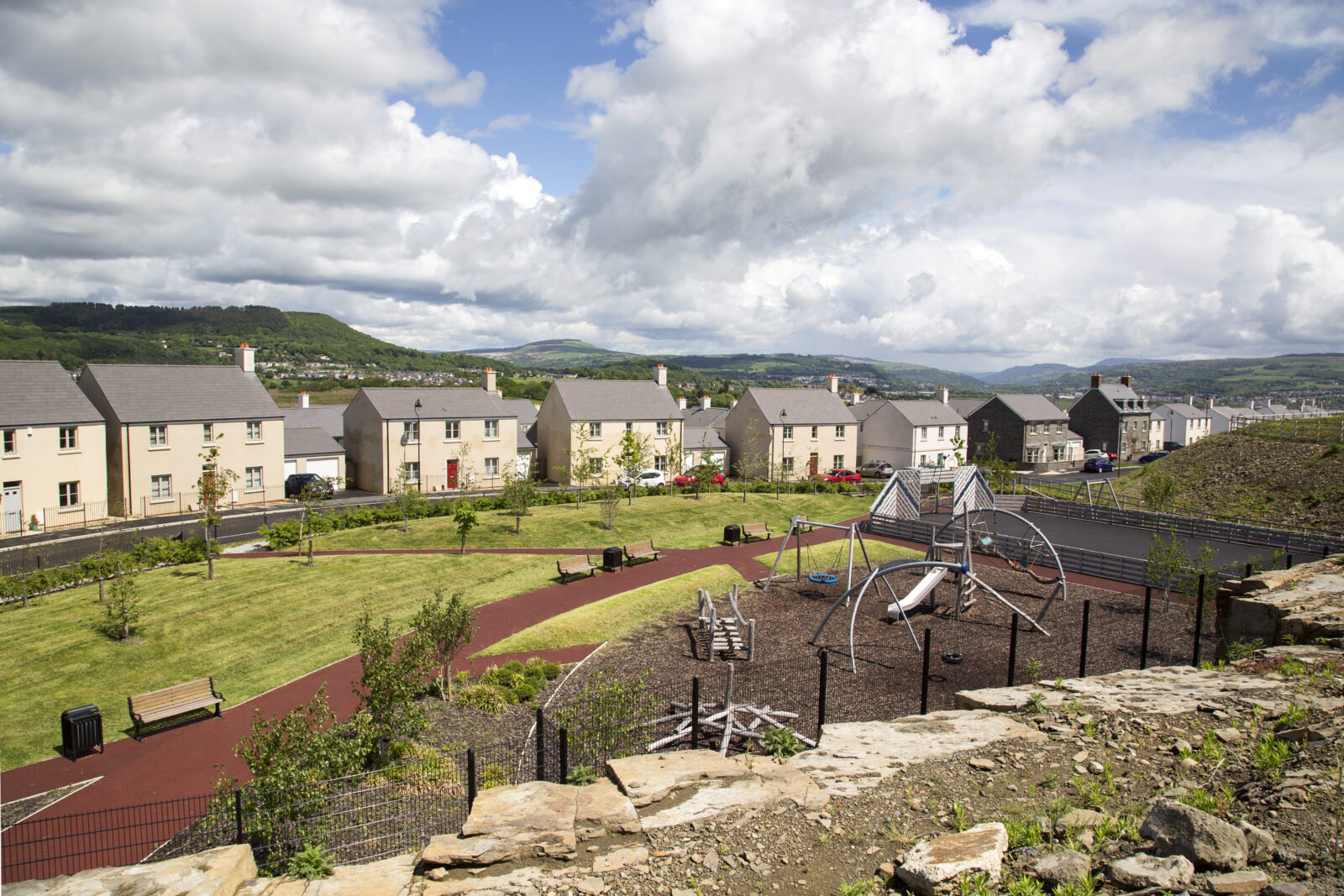


Earlier this week on 17 August 2026, MHCLG published the revised National Planning Policy Framework (“NPPF”), following consultation on proposals released in December 2025. The NPPF confirms the Government’s commitment to increasing housing delivery, supporting economic growth and accelerating decision-making. In paragraph 1, it is described as being of critical importance and a material consideration in planning terms. While much of the consultation draft has been carried through into the final version, several notable changes have been made in response to consultation feedback. In this article, we will consider points to note of general application as well as highlighting those updates.
Before delving into the NPPF, it is also worth noting that on the same day, the Government published the response to the recent government consultation on reforms to the statutory consultee system and Housing Delivery Test (HDT) results for 2024 and 2025 and a revised HDT Rule Book. The response to the consultation confirms that Sport England will be retained as a statutory consultee, but only for development that leads to the loss of playing fields for housing or commercial development, and substantial sports or school development on playing fields. The statutory consultee status of The Gardens Trust and Theatres Trust is being removed, but a new notification requirement is being introduced to ensure these bodies can continue their important role in the planning process. National statutory consultees that receive the highest volume of planning applications will be reformed: Active Travel England, National Highways, Historic England, and the Mining Remediation Authority. The moratorium on new statutory consultees will be maintained. The 2025 HDT results will be used for the purposes of decision-making.
The revised NPPF applies from the day of publication, subject to transitional arrangements contained in Annex 1.
The NPPF introduces a new decision-making structure under policies S3, S4 and S5. This replaces the tilted balance under paragraph 11 of the previous NPPF. In broad terms, S3 directs decision-makers to apply S4 where development is within a settlement and S5 where development is outside a settlement. Where a site falls partly within and partly outside a settlement, the relevant parts of the site are to be assessed against S4 or S5 as applicable. This is likely to make settlement boundaries, site composition and the treatment of split sites increasingly important in planning judgement.
A key change is the introduction of a policy supporting residential development within reasonable walking distance of well-connected railway stations. Under policy S5(1)(h) (and similarly GB7(1)(h) for Green Belt land), residential and mixed-use development outside settlements can be approved where it is within reasonable walking distance of a well-connected station. Additionally, policy L3(2)(c) requires minimum densities of at least 35 dwellings per hectare (or 45 dph for higher-frequency stations) for development within reasonable walking distance of such stations. The consultation draft proposed minimum density requirements of 40-50 dwellings per hectare. For landowners near stations, this may enhance the planning prospects of some sites. For local planning authorities, the scope to resist applications in these areas has been materially narrowed. The Government states that this is likely to “fast-track quality homes in well-connected areas”.
The definition of “reasonable walking distance” in Annex B (Glossary) is: “around 800 metres, or around 10 minutes’ walk time if topography, route availability and quality or physical barriers would prevent or discourage walking from up to 800 metres away.”
The Glossary also notes that where the distance is to be calculated, only the parts of the development site that fall within the reasonable walking distance are subject to the relevant policy provisions. It is likely that the interpretation and application of this will be subject to legal challenge over the coming years.
Policy S5 contains a broader route for development outside settlements where it would meet an evidenced unmet need. Although housing need is likely to be the most obvious example, the wording is not limited to housing. The reference to unmet need in policy E2(2), including under S5, suggests that the concept may also be relevant to economic development and employment land where the evidence supports it.
The Government has also refined its approach to the Golden Rules for Green Belt and grey belt development.
Under the consultation draft, qualifying schemes were generally expected to deliver at least 50% affordable housing. The revised NPPF adopts a more flexible approach under policy GB8 (the Golden Rules). Rather than imposing a universal requirement, the affordable housing requirement will typically be set at 15 percentage points above the highest existing local policy requirement, subject to a cap of 50% (for areas with no existing requirement, the default remains at 50%). This applies to major development involving housing on land released from or within the Green Belt.
The new NPPF also softens the consultation draft’s position on viability. The draft sought to prevent site-specific viability assessments from reducing Golden Rules obligations. In response to concerns raised by the development industry, the published version provides limited circumstances in which a viability assessment demonstrating that it would not be possible for a development to comply with the Golden Rules may be submitted as part of a development proposal. This includes previously developed land (GB8(3)(a), a strategic site (GB8(3)(b) and for a development which is of wholly different type to that considered in the viability assessment (GB8(3)(c)).
The NPPF also introduces the concept of “medium development” (defined in Annex B as housing development of 10-49 homes on sites up to 2.5 hectares). Policies in the NPPF that apply to major development apply to this category and those that apply only to this category do not apply to larger scales of development. This change is reflected in the amendments made to planning application fees as well. The NPPF also recognises the role of strategic sites by creating a distinct category of sites comprising around 1,500 units or more with tailored policy support.
The NPPF also places greater emphasis on digital infrastructure, data centres and the technologies required to support future economic growth. Policy E1 requires development plans to set out a clear economic vision and strategy having regard to the industrial strategy, including making provision for clusters of knowledge and data-driven industries, data centres and associated infrastructure. Policy CO1 gives substantial weight to the benefits of expanding telecommunications networks, including standalone 5G and gigabit-capable broadband. Alongside wider Government initiatives relating to AI and digital investment, the revised NPPF signals continued policy support for these sectors.
The proposed minor but significant proposal to replace “and” with “or” within the definition of “Veteran Trees” has not made it into the revised NPPF. The final wording therefore preserves the existing, narrower formulation, rather than broadening the category that was proposed in the consultation draft.
The fourth test, that the tree must offer ‘exceptional’ value also remains unchanged. The proposed change within the consultation draft may have increased the number of trees to be classified as veteran, which could have complicated delivery and planning decisions, a welcome return to the previous position.
For developers, infrastructure promoters and landowners, this provides greater continuity than some had anticipated during the consultation process. While ancient woodland, ancient trees and veteran trees continue to benefit from significant policy protection, the absence of the proposed expansion avoids a potentially wider category of habitats being brought within the NPPF’s strongest protections for irreplaceable habitats.
The NPPF brings Vacant Building Credit to the forefront through the providing affordable homes policy HO8(4). This is likely to be welcomed by some residential developers bringing vacant buildings back into use or redeveloping vacant floorspace, as it may reduce affordable housing contributions by reference to the existing vacant floorspace. This does not apply to vacant buildings which have been abandoned, or to major development on land within or released from the Green Belt (to which the requirements in policy GB8 apply).
Policy DM3(1)(d) provides that local planning authorities should consult statutory or internal consultees only where necessary, and decisions should not be delayed to secure advice beyond statutory deadlines unless (our emphasis added) there is insufficient information, public safety risks, or more detailed advice may enable approval rather than refusal. In theory, this should speed up the consenting process however, the effectiveness of this change will depend on whether officers are comfortable proceeding where consultation responses are absent or delayed.
Policy DM6 places greater emphasis on standardisation and efficiency in the use of planning conditions and obligations. Where national model conditions are relevant, they should be used unless there are strong reasons for taking a different approach, and pre-commencement conditions should be avoided unless clearly justified. Applications to discharge conditions should be dealt with promptly to avoid unnecessary delay. Planning obligations should only be used where unacceptable impacts cannot be addressed through conditions, and the NPPF anticipates the use of national model planning obligations where relevant, although, at the time of writing, these do not appear to have been published (DM6 (3) and (4) of particular note). The policy paper notes that a consultation will be published shortly on a standard s106 template for medium sites.
In addition to the points noted above, the policy paper highlights some other significant changes, including:
The new NPPF is not a re-badged version of the consultation draft. It’s largely immediate effect, the new S3/S4/S5 framework and the more pronounced “default yes” approach will affect live applications and appeals, land promotion and emerging local plan strategies. The detail will be particularly important for sites near well-connected stations and straddling settlement boundaries and proposals seeking to rely on evidenced unmet need. We anticipate that early queries around interpretation are likely to arise relating to the transitional position and judgment around those revised concepts.
For further advice on the implications of the revised NPPF for any projects you are working on, please contact Gary Soloman, Matthew Tucker, Daniel Whittle or Adam Richards. We will also continue to share insights on the new NPPF as it starts to be applied by decision makers.
 Thought leadership
20 October 2026
/Passle/5d9604688cb6230bac62c2d0/SearchServiceImages/2026-10-20-15-48-06-807-6ad78d361209e9b330ad682f.jpg)
Thought leadership
13 October 2026
/Passle/5d9604688cb6230bac62c2d0/SearchServiceImages/2026-10-13-13-19-48-365-6ace2ff48209d8ca9829f759.jpg)
Thought leadership
7 October 2026
/Passle/5d9604688cb6230bac62c2d0/SearchServiceImages/2026-10-07-13-24-03-610-6ac647f33724c91c5285c5bc.jpg)
/Passle/5d9604688cb6230bac62c2d0/SearchServiceImages/2026-10-02-16-15-17-647-6abfd895f42906e03e5c84da.jpg)
Legal updates
1 October 2026

Thought leadership
1 October 2026
/Passle/5d9604688cb6230bac62c2d0/SearchServiceImages/2026-09-17-16-44-01-145-6aac18d13163f6587eb96e08.jpg)
/Passle/5d9604688cb6230bac62c2d0/SearchServiceImages/2026-09-29-16-13-19-636-6abbe39f460fb9469a259fed.jpg)
Thought leadership
28 September 2026

Legal updates
22 September 2026

Thought leadership
22 September 2026
/Passle/5d9604688cb6230bac62c2d0/SearchServiceImages/2026-09-22-12-58-29-767-6ab27b750e64863551deb684.jpg)
Want more Burges Salmon content? Add us as a preferred source on Google to your favourites list for content and news you can trust.
Update your preferred sourcesBe sure to follow us on LinkedIn and stay up to date with all the latest from Burges Salmon.
Follow us