Legal updates
The new NPPF and the opportunity for development around stations

18 Nov 2026
5 min read
This website will offer limited functionality in this browser. We only support the recent versions of major browsers like Chrome, Firefox, Safari, and Edge.
Legal updates



Station-led development was one of the headline proposals in the December 2025 consultation draft of the National Planning Policy Framework (NPPF). The new NPPF represents a step change in how Government views development around railway stations. Planning reforms in December 2024 introduced the concept of “grey belt” land within the Green Belt, alongside Golden Rules governing Green Belt release for housing. More significantly, following consultation between December 2025 and March 2026, the new Framework now confirms a “default yes” for suitable housing proposals around rail stations — both within existing settlements and, notably, around well-connected stations outside them, including on Green Belt land. Policies S3, S4 and S5 create a more supportive framework for housing and mixed-use development, with policy S5 expressly supporting suitable development outside settlements where it is within reasonable walking distance of a well-connected station. In the Green Belt, policy GB7 can mean qualifying station-led development is considered appropriate, although major housing schemes must still satisfy the Golden Rules in policy GB8. The policy extends beyond mainline rail to underground, tram and light rail stops.
The new Framework sets minimum densities around stations — the consultation proposed 40 dwellings per hectare around all stations, rising to 50 dwellings per hectare around well-connected stations, but the final Framework sets minimums of 35 dwellings per hectare near qualifying stations, rising to 45 dwellings per hectare where services are at least twice the qualifying frequency. A “well-connected” station is one within a top 80 Travel to Work Area by Gross Value Added that is served during the daytime by at least four trains or trams per hour overall, or at least two per hour in any one direction. The Annex B glossary generally defines “reasonable walking distance” as 800 metres or a ten-minute walk, with routes, topography and physical barriers taken into account where distance alone would be unrealistic. This signals a clear intent to drive urban and suburban densification, with explicit support for the redevelopment of corner plots, upward extensions, and infill development in station-adjacent areas.
At first sight, an approximate 800-metre radius around qualifying stations creates an obvious exercise in identifying potentially developable land. However, the policy should not simply be applied by drawing a circle around a station on a plan. Walking time, the quality and availability of routes, topography and physical barriers matter. Railway lines themselves, major roads, waterways and other infrastructure may mean the land is geographically close to a station but does not enjoy the accessibility which a straight line measurement may otherwise suggest.
For developers and landowners, the implications are considerable. The question changes from “Why should this site be developed?” to “How can this site be developed well?”, and sites that may previously have faced planning challenges or been overlooked could become far more attractive. The new Framework has been wholly restructured into clear, rules-based national policies for plan-making and decision-making, including a permanent presumption in favour of suitably located development. Coupled with stronger in-principle support for brownfield development, this creates a more permissive planning environment than we have seen in decades. Local policies that conflict with the national decision-making policies will carry less weight, significantly reducing the scope for local resistance to well-conceived station-area schemes.
This is likely to become an important early due diligence question. A station can also qualify where there is a reasonable prospect of reaching the relevant service frequency because of planned upgrades or agreement with the rail operator. There is currently no Government list of qualifying stations. That means it is currently for individual decision-makers to determine whether the criteria is met.
There is also an important alignment with wider transport policy. Stations are increasingly recognised as more than transport hubs: they can be catalysts for new homes, jobs, retail, leisure and community facilities, and the reforms strengthen the case for looking beyond the station itself to how surrounding land can support new mixed-use communities. The new NPPF encourages consideration of multimodal connectivity — bus, cycle, and micro-mobility — and integration with local plans to support continual activity and placemaking around stations. The availability of regional and local planning funding for infrastructure improvements further strengthens the commercial case.
For those with land interests around stations, the message is clear: act now. The new policies took effect on publication for decision-making, and apply to plans prepared under the new Framework from 17 August 2026. The policy framework has moved decisively in favour of station-adjacent development, and early movers will be best placed to capitalise on this evolving landscape. However, station eligibility, walkability, infrastructure and early due diligence remain critical to realising the opportunity.
The new NPPF creates a materially more supportive policy environment for station-led development but identifying land within 800 metres of a station is just the start. Whether the policy support translates into development will depend on a range of issues, including whether the station itself meets the new definition, the reality of pedestrian connectivity, Green Belt considerations and, critically, whether the infrastructure needed to support the development can be delivered.
Discover more perspectives on the opportunities, planning considerations and practical challenges shaping development around railway stations.
Explore now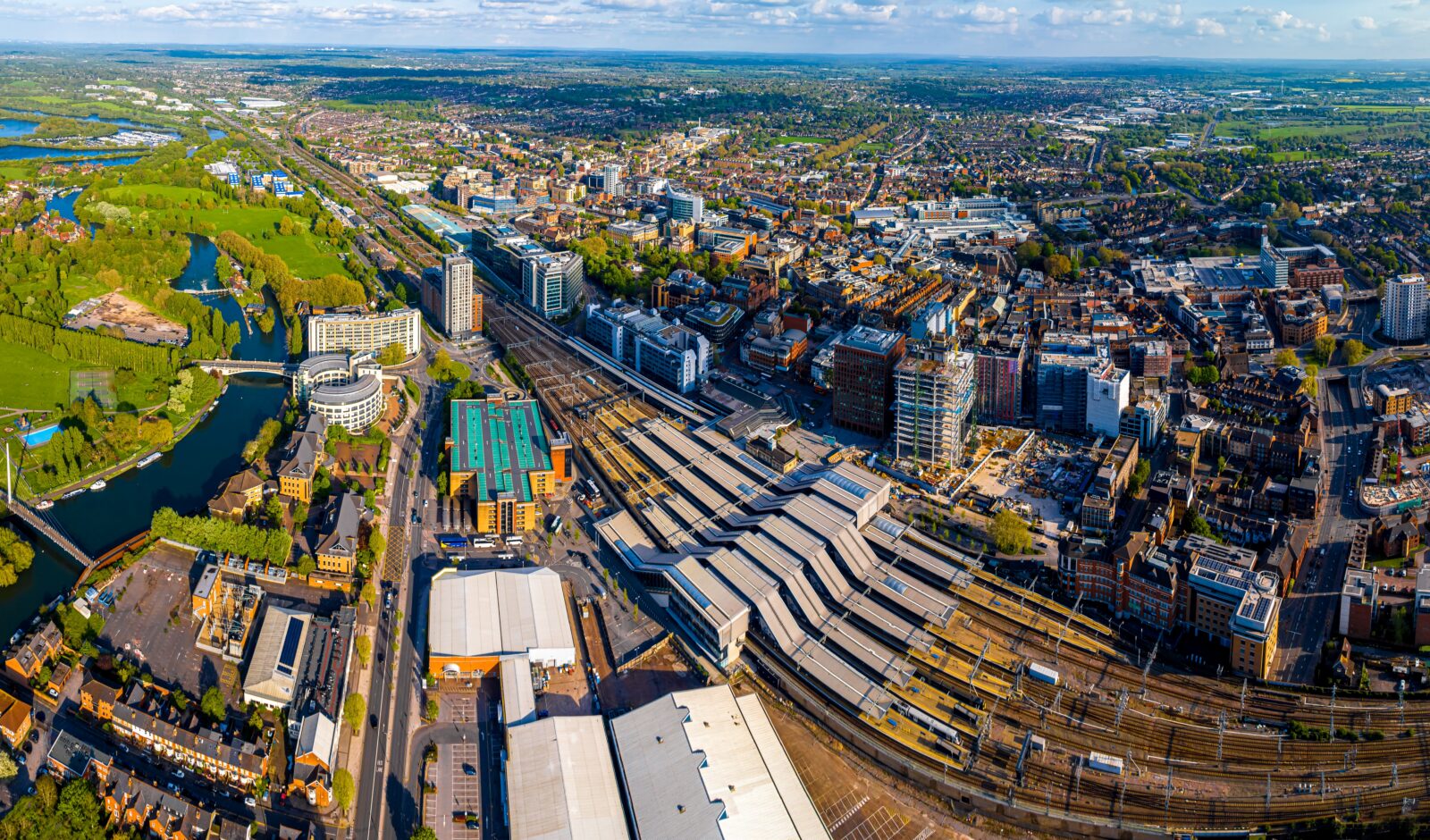
 Legal updates
18 November 2026

Legal updates
18 November 2026

Legal updates
18 November 2026

Legal updates
18 November 2026
Legal updates
18 November 2026

Press Releases
4 November 2026