Legal updates
How regeneration schemes around stations can be made denser without altering the character of the area

18 Nov 2026
3 min read
This website will offer limited functionality in this browser. We only support the recent versions of major browsers like Chrome, Firefox, Safari, and Edge.
Legal updates
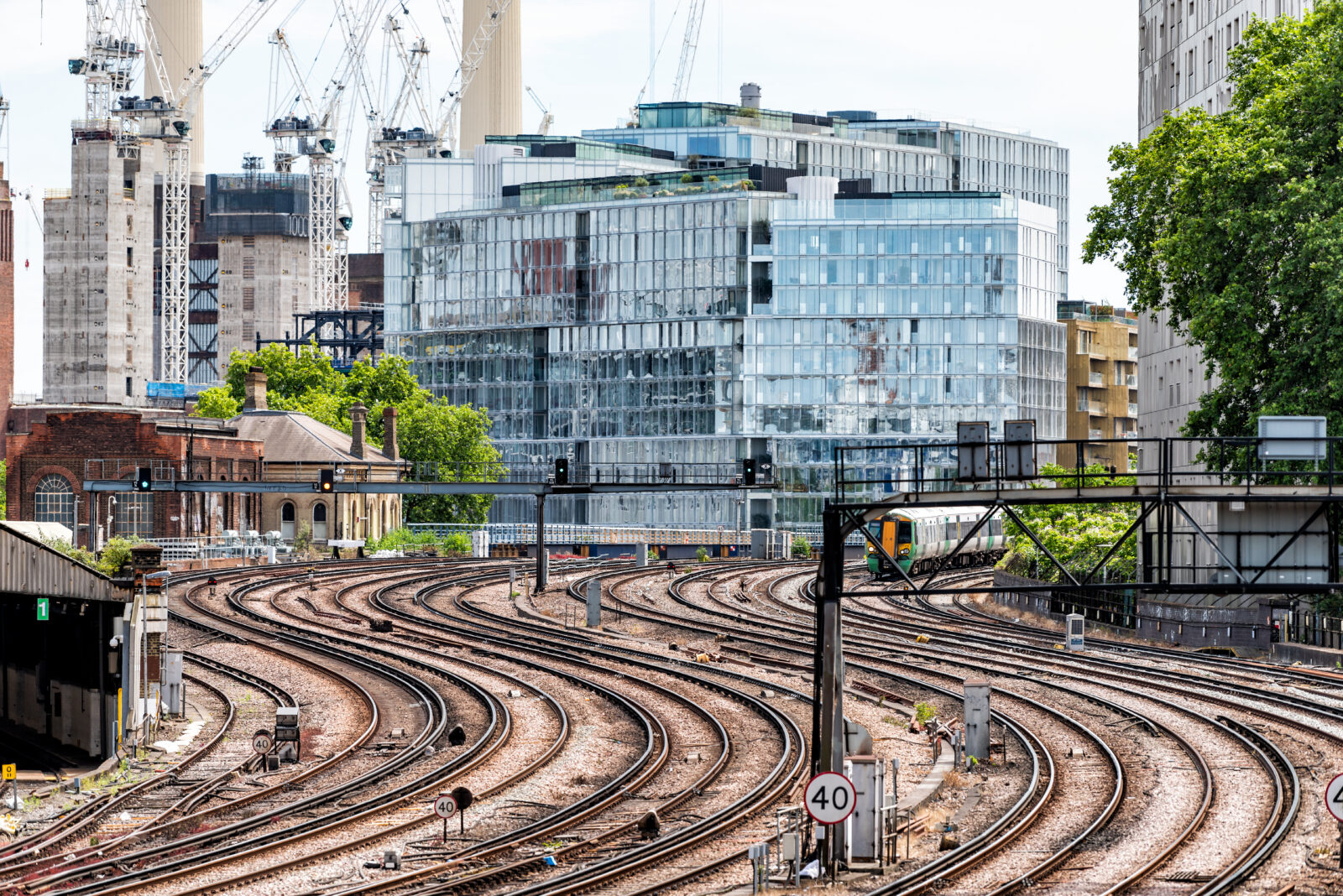


One of the persistent anxieties around station-area development is that increased density inevitably means tower blocks and a loss of local character. In reality, there is a rich vein of opportunity in what has become known as the “missing middle” – medium-density housing, typically four to six storeys, that delivers significantly more homes per hectare without overwhelming the streetscape.
The to this key lies in graduated density. Transit-oriented development principles suggest that the area within approximately 800 metres (about a ten-minute walk) of a station or transport hub is suitable for higher density – an approach now broadly reflected in the new NPPF’s definition of “reasonable walking distance”. But density need not be uniform across a scheme. A thoughtful approach allows for greater intensity close to the station, transitioning to lower density further away. This respects the existing character of surrounding neighbourhoods whilst optimising the land closest to the transport node.
Design and placemaking are central to making density work. Quality communal spaces, play areas, and urban greening can transform what might otherwise feel like overdevelopment into a genuinely attractive place to live. Medium-density housing has been delivered successfully many times before. It is not a novel concept, but it is one that has been under-utilised in development in English and Welsh over the past few decades.
There are also important policy opportunities. The new NPPF sets minimum dwelling densities around transport links and town centres, whilst encouraging infill and upward extensions. Its density policies have been refined since consultation to support more intensive use of land. The final Framework also revises the minimum density thresholds around well-connected stations and how they apply – setting minimums of 35 dwellings per hectare near qualifying stations, rising to 45 where services are at least twice the qualifying frequency – and introduces a new definition of “reasonable walking distance”, generally 800 metres or a ten-minute walk, taking account of routes, topography and physical barriers. Importantly, local policies that are inconsistent with the national decision-making policies will carry less weight, and the circumstances in which the presumption in favour of development is disapplied because of conflict with design or density policies have been limited – reducing the scope for restrictive local design codes to frustrate well-designed, higher-density station-area schemes.
SME developers have an important role to play. Many are well placed to deliver the variety of housing types (such as mansion blocks, mews houses, courtyard schemes) that make medium-density development both viable and characterful. For station-area regeneration to succeed at scale, we need to move beyond the binary of low-rise suburbia and high-rise urban living, and embrace the nuanced middle ground that medium density offers. This will open up opportunities and may also help with viability.
Discover more perspectives on the opportunities, planning considerations and practical challenges shaping development around railway stations.
Explore now
 Legal updates
18 November 2026
Legal updates
18 November 2026
Legal updates
18 November 2026

Legal updates
18 November 2026
Legal updates
18 November 2026

Press Releases
4 November 2026