

 Podcasts
Pensions Pod S8:E4 – What can we learn from professional trustees?

17 Nov 2026
6 min read
This website will offer limited functionality in this browser. We only support the recent versions of major browsers like Chrome, Firefox, Safari, and Edge.
Podcasts


In the fourth episode of Season 8 of the Burges Salmon Pensions Pod, Helen Norman and Caleb Rees are joined by Dan Gilmour from IGG to discuss what it means to be professional trustee. Dan takes us through the growing role of trustees including the challenge of staying on top of regulatory changes and working with sponsors. He also explains some of the practical differences between professional trustees and lay trustees.
Previous episode

Trainee Solicitor, Burges Salmon
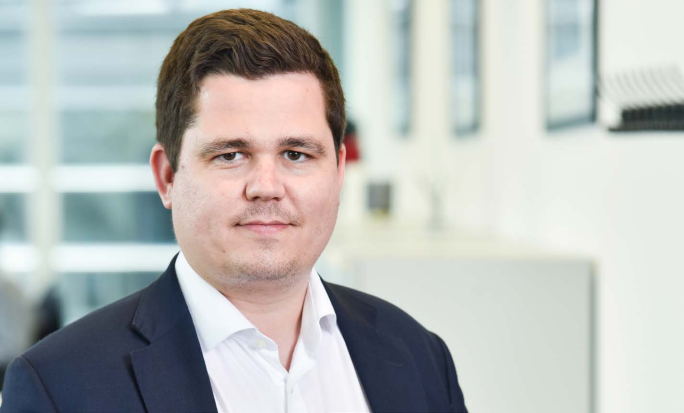
Helen Norman, Senior Associate, Burges Salmon (00:05)
Hi everyone, my name is Helen Norman and I’m a Senior Associate in Burges Salmon’s Pensions and Lifetime Savings team. I’m joined today by my colleague Caleb.
Caleb Rees (00:15)
Hi everyone, my name is Caleb Rees and I’m a Trainee Solicitor in Burges Salmon’s Pensions and Lifetime Savings team. Thanks for having me on the podcast today, Helen. I’m very much looking forward to it.
Helen Norman (00:26)
Thanks for coming. So, welcome everyone to the fourth episode of season eight of the Burges Salmon Pensions Pod. And in today’s episode we’ll be discussing what it looks like to be a professional trustee. So, we’re joined by Dan Gilmour a Trustee Director at IGG. Dan, thank you so much for coming on the podcast.
Dan Gilmour (00:44)
Thanks so much for having me, really looking forward to having the discussion this morning.
Helen Norman (00:47)
No, thank you. Can you just start off by telling our listeners a bit more about your role?
Dan Gilmour (00:53)
Yeah, sure. So, as you said, I’m a Trustee Director at IGG, which means I’m responsible for looking after a portfolio of clients, including schemes ranging from a million pounds up to 250 million. And that’s a range of sole trustee chair and trustee board roles.
Helen Norman (01:12)
And what exactly attracted you to becoming a professional trustee in the first place?
Dan Gilmour (01:18)
So, when I graduated, I joined one of the large accounting firms in their restructuring team and I fell into kind of the pensions team doing covenant work. I ended up spending the next, nearly, decade doing that. And then I decided I wanted to do something different but still stay within the pensions industry because I found it really interesting. And in my role as a Covenant Advisor, I’d been doing a lot of work with professional trustees so I could kind of see some of the work which they’d been doing. So yeah, it really attracted me to pursue it as a new career, but still within pensions.
Caleb Rees (01:55)
Thanks Dan. As I mentioned earlier, I’ve sort of started in the Pensions team here about six weeks ago and what’s really struck me is sort of the volume of legislation and regulation that trustees need to be aware of and adhere to. So, to help with this, as trainees we’ve been completing the Trustee Toolkit, which I’m sure our listeners will be aware of. Can you tell us a bit more about what you think are the biggest challenges to upskilling as a trustee?
Dan Gilmour (02:25)
I think you nailed it right on the head there, Caleb, in terms of just the amount of new legislation, regulation, et cetera, coming through. There’s so much change all the time, which A, makes it really interesting to be in pensions, but B, does mean that you’re always learning, there’s always new things to get to grips with, which is really interesting. I think for professional trustees, it’s probably a bit easier to keep up to speed because we have regular internal training.
So last week, for example, we were doing some training on how to deal with pensions disputes, whether that’s going to the ombudsman, whether it’s going to court. So having the regular internal training, but then also the different situations you’re seeing on your clients every day. Everything’s doing something differently. And then also the external training, as you know, lots of the pensions providers, the big actuarial houses, legal firms etc all do loads of really interesting and helpful training courses. So, I think for professional trustees it does make it easier but for lay trustees I think it is becoming increasingly difficult to keep up and I know that the Regulator has said that they’re going to be updating the Trustee Toolkit which I think will be really helpful because some aspects of it do feel a bit outdated and whether you’re a professional or lay trustee, you should have access to the same external training materials.
Helen Norman (03:57)
I think the Trustee Toolkit is such a good base level for obviously all trustees have to complete it, but it is hard as trustees when a typical board can have such different knowledge and understanding between individuals and I think the point is that the board come together and kind of complete each other. But we, definitely as lawyers, we can offer more generic legal training in trustee meetings, but also just tailor our training to whatever the board wants at that specific time. So, at the moment we’re giving a lot of training on AI, quite a lot on the inheritance tax pension changes. And it’s just something that I think you want trustees to know that they can just ask, or mention to their advisors, oh, we feel like we’d like upskilling on this particular topic or this particular policy that we have in place. And then it’s very helpful for the advisors to be able to tailor it specifically and make it more practical.
So, what, Dan, do you think about the professionalisation of trustees? It was definitely a trend we’re seeing in recent years.
Dan Gilmour (05:05)
Yeah, as you say, it’s definitely a growing trend. I think the professionalisation of trustees is a good thing. So, for example, as a professional trustee, we’re required to be members of the Association of Professional Pension Trustees, which we have to do certain exams to pass, we have to get references and then also the regular training, like I mentioned, both internally and externally. But I do still think there’s a really important role for lay trustees when you think that our key role is to protect members benefits, it could be really helpful to have the input of lay trustees who might be closer to the membership.
So, for example, on one of my schemes, the employer decided that they wanted to move to a sole trustee model, which it has the power to do under the rules. But we wanted to make sure in the context of that project that we still had access to the voice of the members because we’d completed the buy-in, we knew that there’d be lots of communications coming up, and so on that case, we actually set up a formal consultative committee so that we have regular meetings with the previous trustees to keep them informed about what’s going on, to seek their input for example into member communications like how do you think this letter will land? Is it clear? Is there anything which we can do to make it as helpful to members as possible?
Helen Norman (06:35)
That’s a really good example of how lay trustees can add a lot of benefit but also can stay involved even where sole trustee is put in place. Are you seeing typically on your clients that you are more acting as a sole trustee, or are you part of the board, or, what kind of percentage would you say?
Dan Gilmour (06:56)
So, of my portfolio, I have currently got four schemes where I am the Chair of Trustees, so working with pensions professionals and lay trustees, but I’ve also got a number of sole trustee clients. And what I’ve found is that sponsors often will decide that the trigger for moving to a different governance model can be where the scheme is at a particular time. So, on a couple of occasions, once we’ve completed a buy-in and the focus is on the data cleanse and getting everything ready for buy-out and wind up, it can be more efficient to move to a sole trustee model where we don’t need to have the formal training as much because we’re seeing it on different cases and from the training we’ve already talked about.
So yeah, I think in those occasions it can make a lot of sense to move to a sole trustee, but it’s very much a collaborative relationship with the other trustees and the sponsor, regardless of what model of trusteeship is chosen.
Helen Norman (08:06)
On a scheme-by-scheme basis, definitely.
Dan Gilmour (08:08)
Exactly.
Caleb Rees (08:10)
Thanks, Dan. I guess building on that relationship then, from your experience, how do you balance the needs of a sponsor with the needs of a trustee?
Dan Gilmour (08:21)
So, as a trustee, obviously our duty is a fiduciary duty to protect members’ benefits. And at the end of the day, that is by far the most important thing, regardless of whether we’re being appointed by and paid by the employer. And there can be situations when it is tricky, but I think that’s when bringing in a professional trustee can be helpful to be able to draw on their experience from other cases.
So, one of my cases, for example, we were initially brought in as a member of the trustee board and the relationship between the sponsor and the trustees had been a little bit challenging for a period of time and the employer wanted to bring me in to support the board as we were looking at doing a risk transfer event and I distinctly remember going to my first trustee meeting as a new member of the board with the employer there as well and there was a bit of a disagreement about how a certain payment which was due under the Schedule of Contributions should be paid because of schemes funding level had materially improved post-gilt crisis and so the sponsor didn’t want to pay the money if it meant that there could be risk of a trapped surplus and then paying tax on it when the scheme is wound up. But at the same time, the Schedule of Contributions is obviously legally binding and the other trustees quite rightly wanted to make sure that they had the security of having those funds in case they were needed in the future.
So, what we were able to agree was to set up an escrow account. So, the money went into an escrow account with very clear triggers on what it could be used for. So, if the scheme needed it to provide funds to complete the buy-in and buy-out, but also if the funds weren’t needed to be able to return them to the sponsor on a timely basis and so just being able to come in and bring a different perspective and try and reach a pragmatic solution which both works for the trustees but also taking into account the needs of the sponsor and on that occasion it was the perfect solution that everybody was happy with.
Helen Norman (10:37)
I’ve definitely seen a few more uses of an escrow account coming up, particularly as schemes are generally having quite a lot of surpluses and it’s just such a – when you speak to my colleagues who’ve been in the industry for many more years than me, they say there was no surplus before, this wasn’t ever- they weren’t conversations that people were having. So it’s quite novel for some people and it’s a really useful thing to discuss with the employer.
I’d reflect on that as well and say I think it’s fair to say that the Regulator expects trustees to act collaboratively with the employer, but also, as you said, for the trustees to remain independent and important for any employers listening to not exert undue influence on the trustees because it is very much a collaborative approach.
Dan Gilmour (11:27)
And I think that’s probably another example of when it can be helpful to bring in a professional trustee because we don’t have the relationship that other lay trustees may have. For example, we’re not members of the scheme. We’re not employees, be they current or former. And so it can be helpful just to bring in somebody who’s completely independent and can look at things and make sure that what’s being done is best protecting members’ benefits.
Helen Norman (11:57)
And quite objective. So, Dan, the final question for today. What as a professional trustee are you looking for from your legal advisors?
Dan Gilmour (12:07)
It’s a great question because at the moment I seem to be taking lots of legal advice across my schemes for all different reasons. So, I think the key thing which I’m looking for is a firm which is pragmatic, which is easy to deal with, which has the scale to be able to work at pace so that on occasion if there’s something urgent which we need to get sorted, then I know that the firm has the capacity to be able to provide that. But also I’m looking for a legal advisor who can be commercial, who can think not just about the dry technical points, but also what we’re trying to achieve is our overall aim and how best can legal advisors work with the trustee work with the sponsor to reach a solution that is sensible, which ideally doesn’t cost a lot of money and which provides the certainty and the input that we need.
Helen Norman (13:09)
Really interesting to hear it from the other perspective.
So, we act for over 350 pension schemes. We try, like you say, to be very pragmatic and straightforward with our approach so that we’re offering practical solutions that will save our clients time and money, giving them the best value from their legal advice. And also, as you say, it’s really important to be able to, well, work with your lawyers in a personal way, but also be collaborative. So, we really try and foster an open dialogue between our clients and their advisors and also positive relationship between the trustees and the sponsoring employers because that will ultimately lead to the best outcomes for the scheme.
Dan Gilmour (13:53)
completely agree.
Caleb Rees (13:53)
Definitely Helen.
Dan Gilmour (13:54)
I always think that it’s really important to try and be as collaborative as possible. There’s no point creating arguments for the sake of creating arguments. At the end of the day, we just want to make sure we’re doing our fiduciary duty, but also being collaborative and not unnecessarily antagonistic.
Caleb Rees (14:16)
Yeah, definitely Helen, I’d echo what you’ve already said, Dan. I think, you know, us at Burges Salmon, we think of ourselves being able to provide that commercial and straightforward advice. So, as we all know, pension schemes are so complex, but the solution doesn’t always have to be that complex. And more and more we’re sort of using and leveraging AI to be able to provide that efficient, fast service that’s sometimes needed by pension schemes. And we’re happy to work with our clients to fixed fees and be transparent about budgets and costs. So yeah, we definitely see those as ways we can help our clients.
Helen Norman (15:02)
Dan, thank you so much for coming on the podcast and telling our listeners about what it’s like to be a professional trustee. It’s an angle we haven’t really covered in all of our seasons, so really, really grateful for you to come on.
Dan Gilmour (15:14)
No, it was a pleasure. Thank you very much for inviting me.
Helen Norman (15:17)
Thank you for listening to the Burges Salmon Pensions pod. We have a great season eight with some more episodes coming up on pensions in divorce and other inheritance tax topics. And you can listen to all of our previous episodes on Spotify or wherever you listen to your podcasts. So thanks for listening.




 Podcasts
3 November 2026 • 6 min read


Podcasts
20 October 2026 • 6 min read
Thought leadership
13 October 2026

Want more Burges Salmon content? Add us as a preferred source on Google to your favourites list for content and news you can trust.
Update your preferred sourcesBe sure to follow us on LinkedIn and stay up to date with all the latest from Burges Salmon.
Follow us