

 Podcasts
Pensions Pod S8:E3 – Pension sharing on divorce: how can the experts help?

3 Nov 2026
6 min read
This website will offer limited functionality in this browser. We only support the recent versions of major browsers like Chrome, Firefox, Safari, and Edge.
Podcasts



In the third episode of Season 8 of the Burges Salmon Pensions Pod, Helen Norman is joined by Sarah Hoskinson, head of our Family law and Divorce team to discuss pensions on divorce. Sarah explains pension sharing, the challenges schemes face in implementation, and her role in the process as a family lawyer.
Previous episode
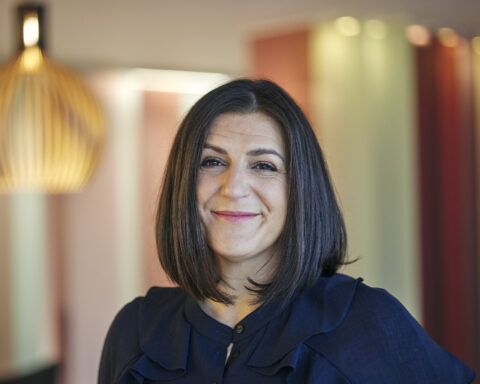
Helen Norman, Senior Associate, Burges Salmon (00:05)
Hi everyone and welcome to episode three of season eight of the Burges Salmon Pensions Pod. My name is Helen Norman, and I’m a Senior Associate in Burges Salmon’s Pensions and Lifetime Savings team. In today’s episode, we’ll be discussing all things pensions on divorce. My guest today is Sarah Hoskinson, a partner and the head of our Family team. Sarah, thank you so much for coming on the podcast.
Sarah Hoskinson Partner, Burges Salmon (00:26)
Thanks for having me.
Helen Norman (00.27)
So to kick this episode off, Sarah, can you explain what your, the interaction between your role as a family lawyer and pensions is?
Sarah Hoskinson (00.38)
Yeah, of course. So, I principally advise on financial settlements on divorce. I’m a divorce lawyer and for most people, beyond their house, pensions are the biggest asset that they have. And so in almost every case that we deal with, there are pensions to be considered, and it’s probably the most technical area of family law and one that’s most feared by family lawyers.
Sarah Hoskinson (01.01)
And so what we do is advise on the information that clients have to get for their disclosure and then how those valuations are used, instructing what are called PODEs – pensions on divorce experts. So drafting letters of instruction to them to make sure that we’re dealing with the issues in the right way, depending on whether it’s a defined contribution or defined benefit pension.
Sarah Hoskinson (01.26)
So whether we’re looking to equalise pension income or we’re looking to equalise their capital and then dealing with the implementation issues and liaising with trustees, schemes and also financial advisers to make sure that clients understand what it is that they are getting and how that can meet their needs.
Helen Norman (01.47)
So, I understand that within the team, you’re the pension specialist or one of, how exactly did that come about?
Sarah Hoskinson (01.53)
So, yeah, I was fortunate enough to train here with a lady, called Catherine Hallam, who was the Head of Family before I was, and she was instrumental in the introduction of pension sharing, along with a number of other leading family lawyers at the time and she co-wrote a textbook with them, so she was very much about learning our craft and making sure that we really knew the detail and were very techie on things.
Sarah Hoskinson (02.19)
And so as part of that, I was always taught to learn as much detail as I could about it and then I found myself quite early on becoming a member of the Resolution Financial Remedy Pensions and Tax Committee, which is part of Resolution, being the organisation of family lawyers for family lawyers that advocates dealing with divorce in the most sort of sensible and dignified way, but this particular committee deals with helping members on the most technical issues.
Sarah Hoskinson (02.43)
So, I was by far the most junior person on that committee, along with all the people who had been really prevalent in bringing about pension sharing. And so I learned so much from them, sort of sitting around for probably about ten years, just really listening, and then I started, advising family lawyers on how not to – like the issues, the sort of elephant traps to watch out for, and the things that as a family lawyer, we needed to worry about.
Sarah Hoskinson (03.16)
That sort of went down well with people, I tried to be very practical about it. And then from there, I now chair that committee. I’m still on it, probably coming up to 20 years later, not quite that long, but almost, I now chair that committee. And through that committee, I’ve also become involved in things like the Family Justice Council, Working Party on Needs, which advised the judiciary on how to deal with needs cases.
Sarah Hoskinson (03.39)
And all that means is cases where the biggest issue is how the parties and the childrens needs are going to be met, which is most people.
And I co-wrote the advice or the guidance for judges on pensions on divorce and then I’ve also been a member of the Pensions Advisory Group, which was a multidisciplinary committee set up in about 2018 to really write a report that’s ended up being the guiding text on pensions on divorce, all with the view to educating family lawyers about how to deal with these cases and judges, because people really shy away from it, there’s a real fear about getting this wrong.
Sarah Hoskinson (04.21)
And then there was an update to that which was called PAG 2 excitingly. So, I was involved in that, and I also set up and Chair the Pension Committee or Co-Chair, sorry, the Pension Committee of the International Academy of Family Lawyers.
So, I’m working on putting together information for, lawyers, family lawyers all over the world about how pensions are dealt with on divorce in as many jurisdictions as we can possibly cover through that network.
Sarah Hoskinson (04.50)
So, there’s been quite a lot of things I’ve done on pensions throughout my career so far.
Helen Norman (04.56)
You mentioned there pension sharing on divorce. Can you just explain at a very high level, what was in place before that? Was there no mention of pensions on divorce or?
Sarah Hoskinson (05.07)
No, so, going back before 2000, divorce outcomes look very different, which is really interesting because actually the statute that we use hasn’t changed, it’s a 1973 legislation, but the courts have a really wide discretion, so it’s been possible for the courts to change their interpretation of that statute depending on pressure, societal and reform pressure. And so right up until 2000, 2001, there wasn’t any sort of presumption of sharing of any assets at all.
Sarah Hoskinson (05.41)
And generally speaking, wives got a house and an income for life, that was the way that it was dealt with, assuming there was enough money to go around and pensions stayed with the husband. Sorry to be a bit stereotypical about it, but that’s exactly as it was back then. And then initially there was something called pension earmarking or pension attachment, as it’s now called.
Helen Norman (06.02)
I’ve seen some of those, yeah.
Sarah Hoskinson (06.03)
Which was essentially just maintenance, but paid directly through someone’s pension, through the husband’s pension, so it wouldn’t kick in until the husband chose to retire, so if they had enough money and wanted to frustrate it, they could just never draw benefits. It would cease if the wife remarried.
Helen Norman (06.22)
Yes, I have heard of that.
Sarah Hoskinson (06.22)
And so actually, again, it was about, financial support rather than independence. And as the movement was coming in the late 90s and so that was in 1996, the earmarking came in, now pension attachment, which is still available but very rarely used. When the law changed with the House of Lords case, White V White, which gave Mrs. White an entitlement to a share of the assets after a long marriage.
Sarah Hoskinson (06.52)
It coincided with the introduction of pension sharing in December 2000, which meant that there could be essentially a pension, clean break and pension sharing lifts some or all of one person’s pension, and then takes that pension credit and puts it into a pension for the other person. And then that is an entirely standalone pension for the recipient, for them to be able to take under whatever the terms of their pension credit membership or their pension terms are.
Sarah Hoskinson (07.22)
But it was really part of this movement to, financial freedom, financial equalisation and the recognition of the equal, excuse me, the equal contribution of parties, whether that’s as the homemaker or the breadwinner.
Helen Norman (07.39)
I guess it shows the importance of pensions as well, because it can be difficult for trustees or employers to get members engaged in their pensions but actually, it can be one of the biggest assets that you own.
Sarah Hoskinson (07.51)
Absolutely, and there’s been some research by Fair Shares, which has sort of gone alongside the Pensions Advisory Group work we’ve done, and a lot of the pension reforms that have been suggested by the government this year, I reported to the MoJ on behalf of Resolution on the proposed reforms around pensions. And behind that sits this Fair Shares research which shows how little people know about their own pensions, certainly how little they know about their spouse’s pension, and in terms of value, but also in terms of what it can do, in many, many cases, women offset keeping the house versus the husband keeping his pension.
Sarah Hoskinson (08.37)
And that’s something that these government reforms are really looking to change because the idea that something that you live in could then meet your needs in an income sense, in the way that a pension could, is a really important point in terms of financial decisions that you make, but quite often the decision is much more of an immediate one that, oh, I’ll keep the house and the kids will stay here with, you know, in it.
Sarah Hoskinson (09.03)
And actually the world is moving on from that and that’s where the government really wants to start looking at people, being more aware of what’s in their pension, what it can do for them, and actually that these are assets of the relationship regardless of whose name they’re in.
Helen Norman (09.17)
No, definitely. So in our Pensions team, I must say, in my career I haven’t come across a lot of queries about divorce. I’ve seen some around where members had been intending to divorce and then they’ve died, and the trustees dealing with their discretionary death benefits and wondering how to approach those and some mentions of it when GMP equalisation, but what kind of work do you do for trustees on divorce?
Sarah Hoskinson (09.51)
And, so what we see is everything that ranges from schemes that don’t have in-house divorce implementation teams. So, whether that’s questions about what are their obligations in terms of provision of cash equivalent values, particularly where perhaps another cash equivalent value has been asked for after the first one within 12 months, so they’re entitled to charge for it, for example.
Sarah Hoskinson (10.13)
Or most commonly it’s where they receive the order and the pension sharing annex from the parties or one of the parties solicitors or the court, and they’re asked to implement it. And with pension sharing, unlike pension attachment, the parties are not required to send it to the trustees or the scheme administrators in advance, whereas pension attachment they have to.
Sarah Hoskinson (10.39)
So while it’s good practice to do it, a lot of schemes don’t see it before it turns up saying please, can you implement this? So, often my team will advise on whether or not the annex has got everything that it needs to in it, whether it’s properly drafted, whether or not they have the other information that the scheme requires in order for the implementation period to start and what to ask for and what to go back to the solicitors with, whether if there’s anything wrong with it or they’re missing anything, and then advise them on the next steps and their obligations once they have all that information. Then there’s probably the next phase of queries,
Sarah Hoskinson (11.15)
which is we’ve done all of that and the recipient of the Pension Sharing Order just isn’t telling us what their destination scheme is, and it’s not a public sector scheme which is an internal transfer, or they don’t offer an internal transfer, which a lot of DB schemes now don’t, and pretty much all DC schemes don’t. So, it’s a we can’t start the implementation period.
Sarah Hoskinson (11.40)
So what do we do? Particularly where there are issues then about the member coming up to retirement age or being in retirement age and then issues around clawback and whether they, how long are they going to be taking funds back from the member. There’s all sorts of complications with that. So, we would advise on what to do and what to say right up to then having not been involved at the outset, but then somebody, getting in touch and saying, actually, we’ve got this member who’s now chasing us, sorry, probably, the member’s spouse chasing us, saying they haven’t had the pension sharing charges paid.
Sarah Hoskinson (12.14)
And so what do they do? Because they still need, they haven’t, the implementation period hasn’t started. But you know, what might the implications be? And then there are a lot of Ombudsman cases around these sorts of issues so we can advise specifically and then give a practical solution as to what that scheme can do in those circumstances. And then right up to really random questions we’ve had where I don’t know, a member, is getting divorced and is, I don’t know, serving a life sentence for some crime and therefore has no need.
Sarah Hoskinson (12.47)
And the scheme questioning whether or not that’s an acceptable.
Helen Norman (12.52)
Severance of the pension.
Sarah Hoskinson (12.53)
Yeah, order and actually really explaining to the trustees how the law works and that actually, if the wife and those circumstances is getting 100% of the pension, they don’t need to be concerned about discretion or how that fits with it because the court is exercising that discretion. Yeah. You know, and understanding explaining how family law works. And if that person doesn’t have any need anymore, regardless, it’s not necessarily their conduct being taken into account.
Sarah Hoskinson (13.19)
It’s purely looking at the fact that one person has no need and there are finite assets and the other person has a need, an external need, and children and things. So, but family law is incredibly fact in case specific, so a lot of it is often advising about solutions and practical ways in which we can get around a problem.
Sarah Hoskinson (13.39)
It’s the one area of pensions on divorce where we really do sit down there and look at statutory instruments and regulations and things like that, which is quite unusual, I think probably is one of the reasons that family lawyers are just a bit, oh, I don’t really know how to deal with this. It’s been long known to be an issue, that family lawyers shy away from and get very worried about.
Helen Norman (14.02)
And where there are trustees that do really need advice from a family lawyer, what stage do you think they should approach lawyers for a advice, or is it any stage?
Sarah Hoskinson (14.11)
I think, ideally, at the outset, check that they’ve got everything that they need to implement it and what their obligations are, and then a plan of action and then come back as soon as they find that they haven’t, got the information and, you know, be proactive in it. One of the things that we can do as a team is to help the training on these issues and also help set up sort of protocols and plans as to how things should be dealt with so that it’s not necessary to come and see a lawyer every single time you get one of those, but like set it out once and for all and then
Sarah Hoskinson (14.46)
know that there is somewhere to go if things get a bit, knotty a bit later. But really, anything that has a divorce element to it, is something that we can advise on and get to the bottom of.
Helen Norman (15.01)
Best to go to the experts on that. What kind of, you mentioned, kind of processes that can be in place, what would those look like in practice?
Sarah Hoskinson (15.10)
So, I think it’s about having checklists and you know, having people trained within a scheme that would have the responsibility for implementing these people who really start building up that practical experience. As I was saying having checklists and understanding through training, which we could do around what’s required, where the information is, there’s a really finite, sort of, suite of statutory instruments that deal with this particular issue around the provision of information or valuation or, implementation, those issues.
Sarah Hoskinson (15.46)
So really getting some training about how to deal with it and then coming up, as I said, with a sort of protocol or a plan about how it would be dealt with and then, and know then who you can speak to when there’s an issue.
Helen Norman (15.59)
Definitely. And do you have any last minute takeaways for our listeners?
Sarah Hoskinson (16.04)
I think it’s a really interesting topic. But it is something that is really technical. And quite often the problems that arise are often because everybody has just put it on the too difficult pile. And so I think really for me it would be saying just take some advice, it’s not necessarily a very involved piece of advice,
Sarah Hoskinson (16.25)
most of the stuff that we do for schemes is very much ad hoc and short pieces of advice, but it is so niche, the particular area and yeah, just, ask us for any questions that you’ve got.
Helen Norman (16.40)
Just knowing where to go.
Sarah Hoskinson (16.41)
Yeah, absolutely.
Helen Norman (16.42)
Thank you so much, Sarah.
Sarah Hoskinson (16.43)
Pleasure. Thanks for having me.
Helen Norman (16.45)
Thank you for listening to the Burges Salmon Pensions Pod. In our next episode, we’ll be featuring Dan Gilmor of IGG, who’s coming on to discuss his role as a professional trustee. If you want to listen to any of our previous episodes, go on Spotify or wherever you listen to your podcasts. Thank you for listening.


 Podcasts
20 October 2026 • 6 min read

Thought leadership
13 October 2026



Podcasts
6 October 2026 • 6 min read

Thought leadership
5 October 2026

Thought leadership
1 October 2026

Want more Burges Salmon content? Add us as a preferred source on Google to your favourites list for content and news you can trust.
Update your preferred sourcesBe sure to follow us on LinkedIn and stay up to date with all the latest from Burges Salmon.
Follow us