

 Thought Leadership
Geothermal Projects: Challenges and Opportunities

21 Oct 2026
5 min read
This website will offer limited functionality in this browser. We only support the recent versions of major browsers like Chrome, Firefox, Safari, and Edge.
Thought Leadership


The UK geothermal market is on the cusp of significant growth. Internationally, geothermal is already well established, providing heat and power for applications ranging from grid-scale generation and heat networks to horticulture and industry. In the UK, however, deployment has historically remained limited.
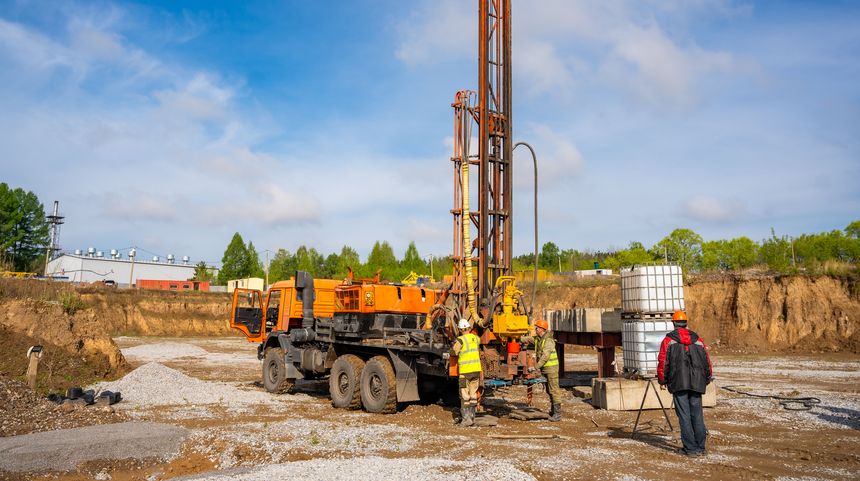
Some of the opportunities and challenges facing the UK market were explored at a recent specialist Geothermal Drilling Training Course that we attended (delivered by Black Reiver Consulting and hosted by Eden Geothermal at the Eden Project in Cornwall). The course brought together expertise from across the geothermal and drilling sectors, with a particular focus on the practical challenges associated with developing and drilling geothermal projects.
The opportunity in the UK is substantial. Project InnerSpace's 2026 report, The Future of Geothermal in the United Kingdom, estimates that the UK has around 25 GW of potential geothermal electricity generation at depths of up to 5 km. The same report sets out a more realistic ambition of 1.5 to 2 GW of geothermal power and 15 GW of geothermal heat by 2050.
One of the particular benefits of geothermal power is its ability to provide reliable baseload generation, complementing intermittent sources such as solar and wind and providing further resilience to the UK’s energy security. Historically, however, the technical challenges associated with deep, hard-rock drilling (typically required to access the UK’s geothermal resources), coupled with uncertainty around drilling costs, have contributed to relatively few geothermal projects being developed in the UK.
Due to “groundbreaking” (pun intended) technological advances in geothermal drilling, these challenges potentially present less of a problem. Earlier this year, United Downs in Cornwall began generating the UK’s first geothermal electricity. With projects already moved forward, the challenge now is to convert wider potential into a pipeline of projects that can be delivered successfully.
Drilling: reducing uncertainty
A key factor in confidence growth is the increasing ability to drill deep wells in hard-rock formations more efficiently and predictably.
The oil and gas industry has spent decades developing the technology and expertise required to drill increasingly complex wells and there is considerable scope for geothermal projects to draw on that experience, including from drilling contractors, equipment manufacturers, subsurface specialists and well engineers.
Recent developments in the US provide an interesting case study. Fervo Energy is using horizontal drilling and reservoir stimulation techniques at its Cape Station development in Utah. Its first 33 MW GeoBlock reached commercial operation in September 2026.
The significance is not that these drilling techniques are themselves new, but that their application to geothermal could help address some of the historic challenges around drilling performance and, importantly, provide greater certainty around drilling costs. Greater predictability should help developers demonstrate that projects can be delivered on a repeatable basis.
Developing the supply chain and Procurement/Contractual Model
Alongside technical challenges, access to an experienced supply chain will be important if UK geothermal projects are to be developed at scale.
The UK currently has a relatively limited pool of specialist geothermal drilling contractors and expertise, particularly when compared with countries with more established geothermal supply chains. However, the UK does have the benefit of a substantial oil and gas supply chain with deep experience in drilling, subsurface engineering, well construction and project delivery.
There are, of course, important differences between geothermal and oil and gas; geothermal projects present their own technical and commercial risks and potentially require a robust risk profile that the oil and gas sector will be less familiar and comfortable with. Nevertheless, there is significant overlap between the skills needed to deliver projects in both sectors and procurement models and contractual profiles will need to be carefully mapped to ensure potential oil and gas participants are not motivated to help develop geothermal projects.
Developers may look to procure projects under a traditional EPC (“wrap”) structure, providing a single point of responsibility across substantial elements of a project. However, the specialist nature and importance of the drilling works may favour direct engagement with an experienced drilling contractor with other elements of the development being procured separately.
There is unlikely to be a single solution which is appropriate for every project. Different structures will create different considerations around interface risk, performance, insurance and responsibility for subsurface and construction risks.
As with other developing energy technologies, simply transferring risk contractually does not remove it. Risks need to be allocated to parties that understand them, are able to manage them and can price them appropriately.
Developing procurement and contracting structures which achieve that balance, while retaining a fundable/investable profile will be important if geothermal projects are to be rolled out on a meaningful scale.
Geothermal is not only about power
Although much of the attention around deep geothermal focuses on electricity generation, the opportunity is potentially much broader.
Geothermal can provide a reliable source of heat for heat networks, industrial processes and other large heat users. There may also be opportunities to co-locate energy-intensive developments, such as data centres, with geothermal projects, allowing both the electricity and heat produced by a project to be utilised.
This could become increasingly relevant as the UK heat network market develops and there is a greater focus on identifying reliable low-carbon heat sources. Burges Salmon's clean heat work similarly identifies access to low-cost heat, construction and operational risk allocation and appropriate commercial models as issues increasingly facing heat network developers.
Geothermal will not be suitable for every location or development. However, where the geology, energy demand and economics align, it could potentially form part of a wider local energy system, supplying electricity and heat to a number of different users.
What comes next?
Despite recent progress, challenges remain. Access to funding, planning and environmental considerations, induced seismicity, community engagement, skills and supply chain capacity will all need to be addressed as these projects develop.
In particular, developers will need to consider how drilling costs and performance can become more predictable, how existing oil and gas expertise can be deployed effectively in the sector and how project risks should be allocated between developers, contractors and the wider supply chain.
These are challenges which have been encountered across other developing energy technologies and there is considerable experience which can be drawn upon as the geothermal market develops.
Burges Salmon has advised on the Eden Geothermal Project, one of the UK's first deep geothermal schemes, alongside its wider work across renewable energy and infrastructure projects. The firm's experience also extends across clean heat and heat networks, co-located energy projects and data centres including the construction, regulatory and commercial issues associated with delivering those projects. We are excited to work on further geothermal and heat projects and to address some of the challenges examined in this piece.
This article was written by Lloyd James and Theo Wapshare.
 Thought leadership
13 October 2026

Thought leadership
13 October 2026


Thought leadership
13 October 2026
Thought leadership
7 October 2026


Legal updates
1 October 2026

Thought leadership
1 October 2026
Thought leadership
22 September 2026

Want more Burges Salmon content? Add us as a preferred source on Google to your favourites list for content and news you can trust.
Update your preferred sourcesBe sure to follow us on LinkedIn and stay up to date with all the latest from Burges Salmon.
Follow us