

 Guides
Heat and Power co-location: unlocking sustainable data centre development

18 May 2026
4 min read
This website will offer limited functionality in this browser. We only support the recent versions of major browsers like Chrome, Firefox, Safari, and Edge.
Guides
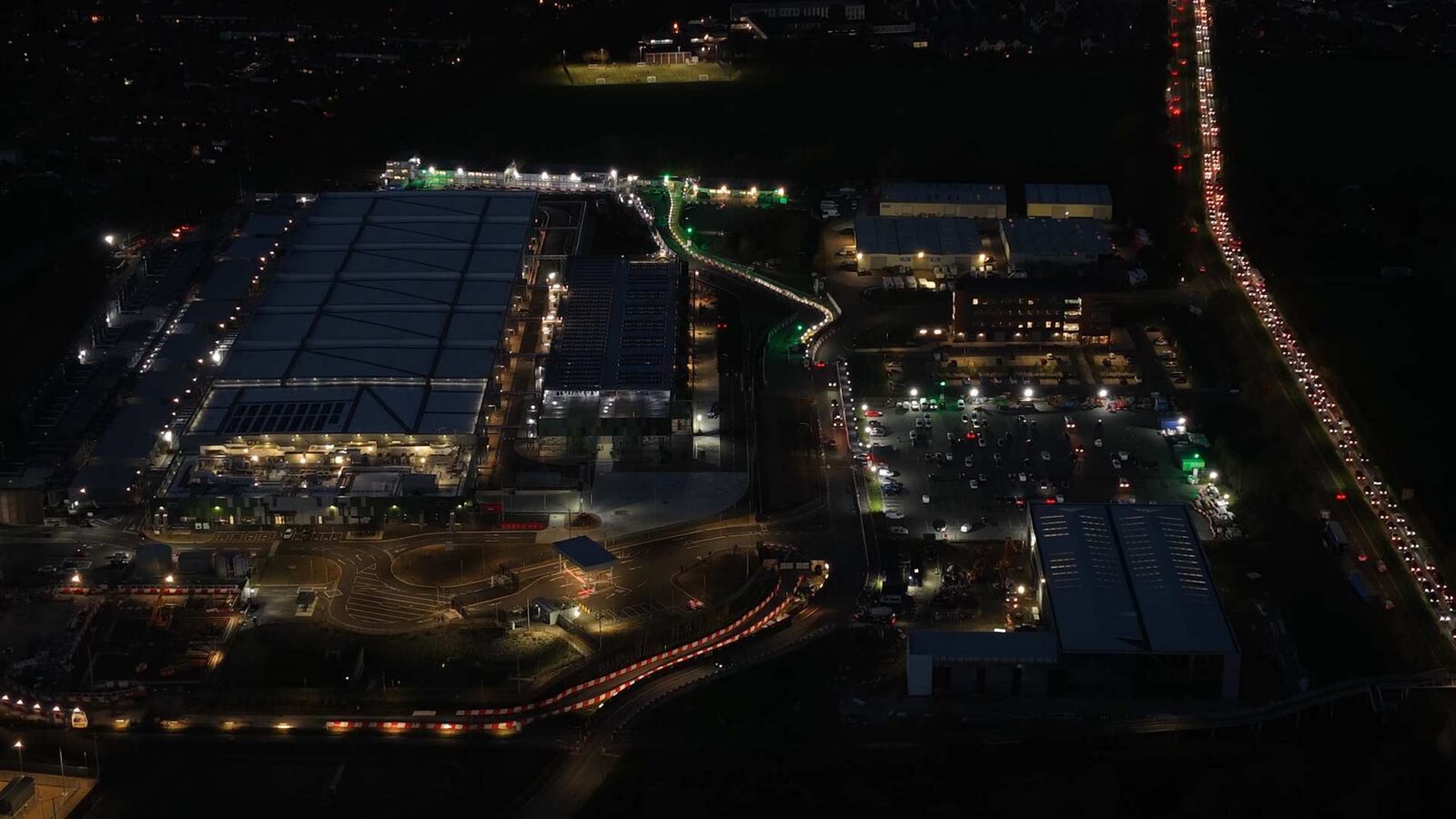



The scale of the challenge is striking. A single hyperscale data centre campus can consume hundreds of megawatts of electricity. As reported in the JLL 2026 Global Data Center Outlook, the average grid connection lead time for a new 50 MW data centre in the UK is seven years.
Against this backdrop, the UK’s binding net zero commitments and the planning system’s increasing emphasis on sustainability also mean that developers must demonstrate their projects are part of the energy solution, not merely a new source of demand. The potential for on-site generation, co-located renewables projects and the ability to manage cooling sustainably and repurpose surplus heat is rapidly growing in strategic importance.
Heat offtake is perhaps the most immediately compelling form of co-location from a sustainability and cooling perspective. Data centres generate enormous quantities of low-grade heat through their cooling systems, which has historically been expelled into the atmosphere as waste. Where facilities are designed with heat recovery infrastructure, that rejected heat can be captured and redistributed into district heating networks serving nearby homes, offices, and public buildings – such as the Old Oak and Park Royal Energy Network (OPEN). A well-designed heat offtake arrangement turns a cooling challenge into a community asset, reduces surrounding carbon intensity, and materially strengthens a project’s planning narrative. Several London borough frameworks already actively encourage this approach.
The regulatory picture is sharpening. Heat network zoning under the Energy Act 2023 will empower local authorities to designate zones where buildings must connect to district heat networks. Sites within or adjacent to a heat zone may face requirements to make waste heat available – but equally, a data centre positioned as an anchor heat source becomes a highly attractive proposition for network developers and local authorities alike. For developers willing to engage early with heat network planning, this represents a significant first-mover advantage.
Renewable or alternative energy co-location addresses a different concern. By siting data centres alongside solar farms, onshore wind, or other renewable generation, developers can secure dedicated clean power and benefit from private wire or sleeved power purchase arrangements. From a planning perspective, on-site or adjacent renewable supply bolsters a scheme’s sustainability credentials. Developers are also considering battery storage and small modular reactors (SMRs) to complete the picture. These assets can smooth intermittent renewable supply, offer back-up capacity satisfying lender and tenant uptime requirements, and complement heat offtake by ensuring operational resilience without sole dependence on grid supply.
The scale of the challenge is striking. A single hyperscale data centre campus can consume hundreds of megawatts of electricity. As reported in the JLL 2026 Global Data Center Outlook, the average grid connection lead time for a new 50 MW data centre in the UK is seven years.
Against this backdrop, the UK’s binding net zero commitments and the planning system’s increasing emphasis on sustainability also mean that developers must demonstrate their projects are part of the energy solution, not merely a new source of demand. The potential for on-site generation, co-located renewables projects and the ability to manage cooling sustainably and repurpose surplus heat is rapidly growing in strategic importance.
Heat offtake is perhaps the most immediately compelling form of co-location from a sustainability and cooling perspective. Data centres generate enormous quantities of low-grade heat through their cooling systems, which has historically been expelled into the atmosphere as waste. Where facilities are designed with heat recovery infrastructure, that rejected heat can be captured and redistributed into district heating networks serving nearby homes, offices, and public buildings – such as the Old Oak and Park Royal Energy Network (OPEN). A well-designed heat offtake arrangement turns a cooling challenge into a community asset, reduces surrounding carbon intensity, and materially strengthens a project’s planning narrative. Several London borough frameworks already actively encourage this approach.
The regulatory picture is sharpening. Heat network zoning under the Energy Act 2023 will empower local authorities to designate zones where buildings must connect to district heat networks. Sites within or adjacent to a heat zone may face requirements to make waste heat available – but equally, a data centre positioned as an anchor heat source becomes a highly attractive proposition for network developers and local authorities alike. For developers willing to engage early with heat network planning, this represents a significant first-mover advantage.
Renewable or alternative energy co-location addresses a different concern. By siting data centres alongside solar farms, onshore wind, or other renewable generation, developers can secure dedicated clean power and benefit from private wire or sleeved power purchase arrangements. From a planning perspective, on-site or adjacent renewable supply bolsters a scheme’s sustainability credentials. Developers are also considering battery storage and small modular reactors (SMRs) to complete the picture. These assets can smooth intermittent renewable supply, offer back-up capacity satisfying lender and tenant uptime requirements, and complement heat offtake by ensuring operational resilience without sole dependence on grid supply.
Co-location is not without complexity. It requires careful structuring — both technically and contractually. There is a timing challenge too: multiple complementary developments must come together at the right moment. Multi-party co-located schemes demand robust interface agreements and governance structures to align differing risk appetites.
These challenges require early and integrated thinking. Site selection must now be driven as much by energy strategy as by connectivity and land value. Contractual frameworks need to allocate risk appropriately across multiple parties and ensure bankability for project finance. A compelling co-location narrative is materially beneficial for planning applications – and in an increasingly competitive market, the ability to deliver a credible co-location proposition is becoming a genuine differentiator.
To discuss data centre development, land rights, co-location and heat offtake, please get in touch with Ros Harris, Emma Andrews, Matthew Tucker, or Alec Whiter.




Explore the six key themes on our dedicated Data Centres hub, covering the critical power, planning, funding and delivery issues influencing data centre projects across their full lifecycle.
Find out more Thought leadership
4 September 2026
/Passle/5d9604688cb6230bac62c2d0/SearchServiceImages/2026-09-04-10-41-42-841-6a9aa0669a3310b0baa411fa.jpg)
/Passle/5d9604688cb6230bac62c2d0/SearchServiceImages/2026-09-02-15-56-11-347-6a98471bb63b3ba3a1092914.jpg)
Thought leadership
19 August 2026
/Passle/5d9604688cb6230bac62c2d0/SearchServiceImages/2026-06-30-10-01-44-548-6a439408a83b787e5f24a424.jpg)
Thought leadership
17 August 2026
/Passle/5d9604688cb6230bac62c2d0/SearchServiceImages/2026-08-17-10-55-37-033-6a82e8a98f6deb11a13873e8.jpg)
Thought leadership
17 August 2026
/Passle/5d9604688cb6230bac62c2d0/SearchServiceImages/2026-08-17-12-49-11-457-6a8303477533d54440c5b4d4.jpg)
/Passle/5d9604688cb6230bac62c2d0/SearchServiceImages/2026-08-13-13-42-11-037-6a7dc9b3db01b67173f512bc.jpg)
/Passle/5d9604688cb6230bac62c2d0/SearchServiceImages/2026-08-10-11-04-48-960-6a79b0504961462595f8a1df.jpg)

Legal updates
29 July 2026

Want more Burges Salmon content? Add us as a preferred source on Google to your favourites list for content and news you can trust.
Update your preferred sourcesBe sure to follow us on LinkedIn and stay up to date with all the latest from Burges Salmon.
Follow us